Key takeaways
- China is altering the international landscape by creating new norms and alliances, especially in the Global South. China is building a new set of international institutions and initiatives in opposition to the Western-led liberal international order.
- China’s engagement with the developing world is relatively successful because it is better coordinated and more consistent than what the West has been doing. It is also better adjusted to the needs of countries in the Global South. This has enormous economic and security implications internationally.
- The West – defined primarily as the US + Europe – needs to face the unpleasant truth that China is winning the influence battle in many parts of the world.
- The Chinese Communist Party has the advantage of a relatively monolithic political structure, which enables it to coordinate financial institutions and corporations quite effectively. China can move much faster than the EU, even if this means that funds are misallocated, or used in ways that the West dislikes.
- The West is undermining its image through self-inflicted wounds such as US withdrawal of aid and perceived US and EU support for Israel, unpopular in many Muslim countries.
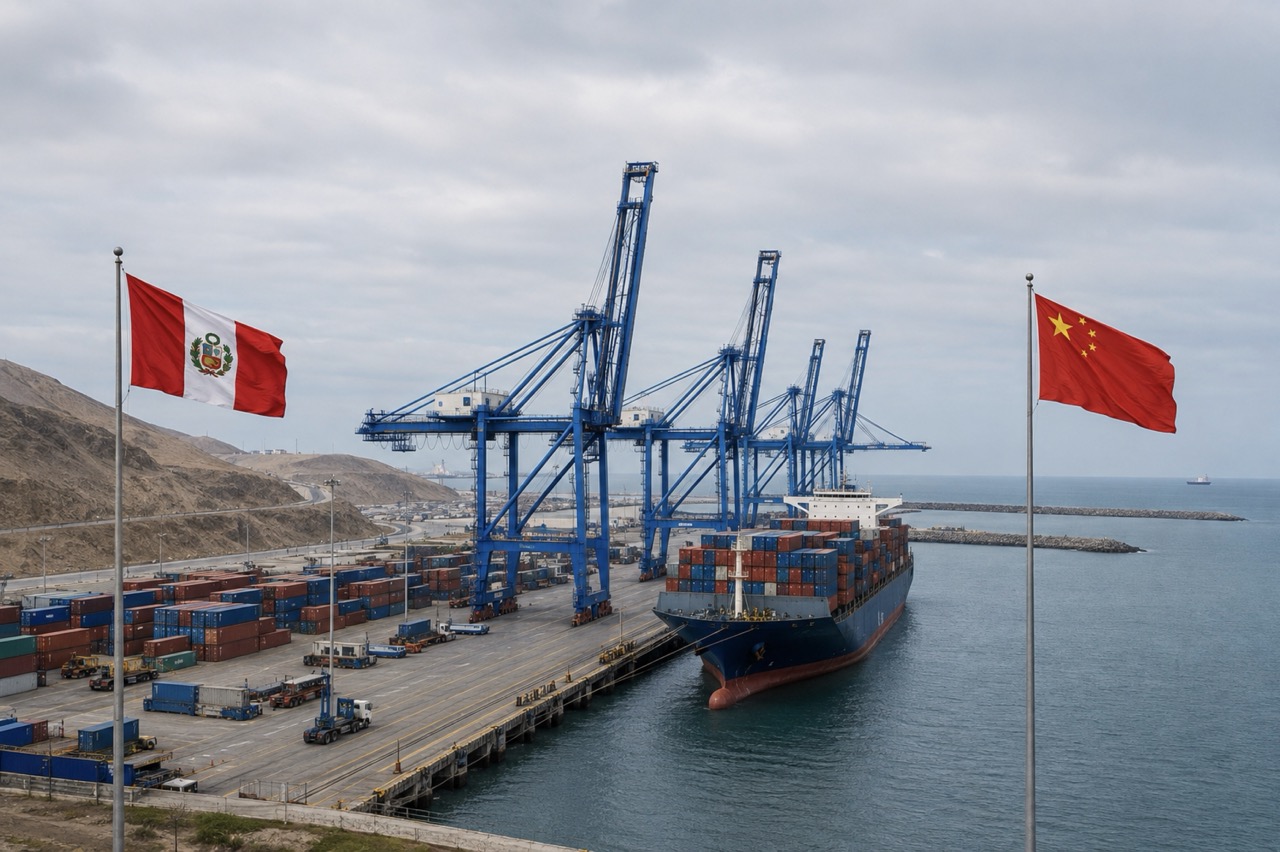
- China’s trade with the Global South is steadily increasing, building new markets which reduce dependence on Europe and North America.
- In reshaping its engagement with the Global South, the West must take the experiences and concerns of developing countries more seriously. This will also provide a better understanding of why China is currently often successful.
- The EU needs to decide whether to compete or cooperate with China – or, we suggest, to use a combination of strategic competition and cooperation in carefully selected areas.
Introduction: China’s challenge to the West
In the last three decades, China has altered the landscape of trade, investment and development in the Global South (defined as including Africa, Latin America, the Middle East, Central Asia, South Asia, Southeast Asia, and the Pacific Islands).Since Xi Jinping became general secretary in 2012, China’s approach to the Global South has generally been equated with the Belt and Road Initiative (BRI), a platform for improving connectivity, infrastructure, and people-to-people exchanges. The BRI builds upon China’s earlier ‘Going Global’ initiative, which was introduced in the late 1990s, as well as attempts in the 1960s and 1970s to develop friendly relations with African countries.[i]
Broadly speaking, under both Xi Jinping and his predecessors, the Chinese government has taken a practical, flexible approach to building relations within a relatively consistent overall strategic framework. This is primarily intended to develop relations and interdependencies with countries in the Global South. In the process, China is introducing new norms for interaction, some of which run counter to the EU’s values-based approach. For instance, China presents its approach as ‘non-interference’ in the politics of partner countries, meaning that authoritarian regimes are tolerated and even supported. It offers the Global South a vision of a ‘community of shared future’, to be built hand in hand with regimes that the West sees as unacceptable. This stands in direct opposition to the EU’s expectation that countries will adopt Western-style democratic and human rights norms.
China’s growing economic clout has changed global commerce. China is the world’s second biggest economy, the world’s biggest producer of manufactured products, and the biggest exporter. China imports raw materials from Global South countries and turns them into finished products, increasing amounts of which are now exported to the Global South. But this is not just exploitation or neo-colonialism, as sometimes depicted in the West. China is looking to Global South countries as emerging markets for its goods, creating an alternative to previous Chinese over-dependence on exporting to Europe and North America.
There is now no doubt that China’s influence-building activity is changing the structure of international politics and governance as well as economics.China uses regional cooperation platforms such as the Forum on China-Africa Cooperation (FOCAC), BRICS, and the Shanghai Cooperation Organisation (SCO) – the last two of which include Russia and India – to build regional networks of influence.[ii] At the same time, bilateral relations are built through trade and investment deals. China’s growing influence and different norms and institutions are a challenge to the Western-led so-called liberal international order, represented by institutions such as the G7, the World Trade Organisation (WTO), and the International Monetary Fund (IMF). Thus, there is an urgent need for the EU to take a clear position on how it intends to react to China’s attempts to reform the international system through influence in the Global South. On the other hand, amid increasing global uncertainties, developing a clear position is easier said than done.
China’s patterns of cooperation with the Global South
China’s regional cooperation patterns vary slightly depending on a region's specific concerns: while various forums relating to different stakeholder groups and policy areas have been institutionalized with Africa over the past two decades, there exist several dialogue and exchange formats with the Arab states, Latin America or the Pacific islands, too.
Particularly since the founding of the FOCAC in 2000, China has been working to strengthen its relations with African countries. Regular summit meetings and ministerial conferences demonstrate China’s commitment to cooperation and respect for African countries. The forum has also become a key platform for China’s Global South diplomacy over the years. In chronological terms, the China-Arab States Cooperation Forum (CASCF), which was established in 2004, is also significant. As a dialogue mechanism between China and the 22 Arab states, it promotes cooperation in areas ranging from energy security to infrastructure development. Since 2006, there have also been regular high-level exchanges between China and the Pacific Islands. The China–Pacific Islands Forum, established in Fiji in the same year, provides a framework for economic and trade cooperation between both sides. China has long-standing ties with Central Asia. However, in 2012, the China + Central Asia (C+C5) Cooperation Forum was established to facilitate diplomatic exchanges between China and the five Central Asian states: Kazakhstan, Kyrgyzstan, Tajikistan, Turkmenistan, and Uzbekistan. Another regional exchange format emerged in January 2015 in the form of the China-CELAC Forum. Through this, China connects with the Community of Latin American and Caribbean States (CELAC), and it meanwhile serves as a priority platform for promoting political relations.
All forums were initiated or strongly promoted by the Chinese government in order to systematically cooperate with entire groups of countries (Africa, Pacific states, Arab world etc.). As an important part of Chinese diplomacy towards the Global South, they establish institutionalised channels through which China can coordinate its foreign policy and economic agenda. The importance of ‘South-South cooperation’ is emphasised in regular summit meetings (every 2–3 years) and joint action plans or communiqués. Another common feature of all formats is that they not only address key political issues and economic interests, but also include educational opportunities and support measures, e.g. for poverty reduction, disaster prevention or environmental and climate protection depending on the situation of the respective country groups. In doing so, China deploys the full spectrum of its engagement with the Global South. In addition to cultivating bilateral ties through traditional diplomacy and regional cooperation forums, it has deepened economic relations through investment, trade, resource extraction, and financial arrangements.
China also forges targeted connections with younger generations by offering educational opportunities through training programs and scholarships. As a result, the number of students studying in China has risen steadily over the past decade – aside from a sharp drop during the pandemic – with the growth driven primarily by students from the Global South. According to official figures available, the majority of foreign students currently come from South Korea. However, the number of students from Western industrialised countries is stagnating or declining, while the number of students from Africa, Southeast Asia and Central Asia is increasing. This shift is changing the proportion of foreign students from different regions. Scholars at major Chinese universities confirm that a growing proportion of students is coming from the Global South and that the number is expected to rise.[iii] This development is reinforced by the notion of a “community of shared future for mankind” (or common destiny), frequently invoked in key speeches by Chinese government officials. Beyond the practical links created through learning the Chinese language, this concept also serves to cultivate an ideological relationship to China.[iv]
The increasing role of the education sector is also reflected in the accelerated expansion of area studies at Chinese universities in recent years, which is equipping Chinese actors for the growing global outreach. Overall, these measures fit into a larger strategic foreign policy framework, which is positively received in many countries of the Global South because of its official reference to upholding a peaceful development with mutual respect, the principle of creating win-win situations, diplomatic efforts to generate global partnerships and the preservation of equality and justice in the reform of global governance.[v] What is more, media and think tank partnerships with the Global South to promote the Chinese perspective on international relations and global governance as well as to broaden the scope of actors referring to those views are becoming more and more important.[vi]
China’s attempts to reform the international system
BRICS is an obvious attempt to develop an alternative international institution as a counter to the G7, which includes only countries from the Global North. In contrast, BRICS, which has expanded its membership to ten in recent years,[vii] includes only Global South countries. Similarly, the Shanghai Cooperation Organisation (SCO), which initially focused on Central Asia and Russia, is expanding its reach to include South Asia and the Middle East.[viii] The SCO has ten full members, but there are also 16 observers and dialogue partners, all from the Global South. These institutions and others such as FOCAC and the China-Arab States Cooperation Forum (CASCF) constitute a clear attempt to create a network of institutions as a Global South focussed alternative to the Western-led liberal international order.
In the plenary session of the 17th BRICS Summit held in Rio de Janeiro in early July 2025 and titled ‘Strengthening Global South Cooperation for More Inclusive and Sustainable Governance’, Premier Li Qiang said:
… all parties have come to see the growing necessity and urgency to reform the global governance system, and all are participating in and promoting the reform of global governance through various means.[ix]
The Chinese Premier’s statement makes it clear that China is actively trying to change the structure of the international order and global governance system via its influence in the Global South. Beijing sees the multilateral cooperation platforms it leads, such as BRICS, FOCAC, and the SCO – which includes Russia and India – as a new governance architecture for reforming the Western-led international order. China’s practice-based approach – which can be termed normative diplomacy[x] – is a direct challenge to the EU’s values-based approach based on respect for Western ideas of democracy and individual human rights.
China’s challenge to the West was laid out in full at the SCO meeting in Beijing in early September 2025. Speaking to leaders from over twenty countries including Indian Prime Minister Narendra Modi and Russian President Vladimir Putin, President Xi Jinping introduced the concept of a ‘Global Governance Initiative’ (GGI).[xi] This, alongside his earlier initiatives the Global Civilisation Initiative (GCI), the Global Security Initiative (GSI), and the Global Development Initiative (GDI), as well as the BRI, is a clear attempt to construct an alternative international order as a counter to the West.[xii]
Thus, a coherent system consisting of five pillars has emerged in Chinese foreign policy through which influence can be exerted on the Global South in particular:
- The Belt and Road Initiative (BRI): Based on expanding transcontinental transportation, energy, and digital networks, infrastructural and material dependencies can be established.
- The Global Development Initiative (GDI): Presenting China as a model of developmental success creates legitimacy for its development policies, supporting South-South cooperation in areas such as poverty reduction, food security, green development and digitalisation, and promoting these policies via the United Nations.
- The Global Security Initiative (GSI): By placing special emphasis on diplomatic relations and stability, existing security policy norms are reinterpreted with the attempt to improve global security governance. A holistic understanding of security enables the broad addressing of traditional and non-traditional security aspects.
- The Global Civilisation Initiative (GCI): By invoking its own history and traditions, China seeks not only to highlight its uniqueness and distinctive path to modernization through this initiative, but also to promote ideological pluralism and cultural diversity. The initiative seeks to emphasise Chinese values as well as the diversity of values to delegitimising universal values. Through inter-civilisation exchange and mutual learning, peace, justice and prosperity are to be promoted worldwide by searching for common interests.
- The Global Governance Initiative (GGI): Long-term institutional reform of the world order and propagation of a multipolar system should strengthen the influence of China and the Global South, reducing Western norm-setting power in favour of multilateral rules influenced by China.
It is noteworthy that China has newly introduced four of these global initiatives since 2021. Although no clear roadmap for the implementation and design of these approaches has yet been presented, it is evident that a parallel order is emerging, based on non-intervention, economic interdependence, and selective multilateralism. In addition to political and economic considerations, the cultural dimension is also being addressed internationally, with invocation to the radiance of Chinese civilisation and history.[xiii
Increasing Chinese influence in the Global South
China’s trade with Global South countries is rapidly increasing, while its reliance on European and North American markets is steadily decreasing. Meanwhile, aid and development finance are also increasing. China is exporting more of its industrial products to Global South countries, meaning that their economies are becoming more tied to China’s. For instance, African countries export natural resources such as oil, iron, zinc and cobalt to China as a supply of raw materials for industrial production. Interdependence between China and the Global South is growing, while trade with Europe and the US constitutes an ever-smaller percentage of their economic activity.[xiv] Alongside the China-led multilateral institutions outlined in the previous section, this means that Chinese influence in Global South countries is rising, and is starting to exceed that of the US and the EU.
China is also at the forefront of science and technology innovation in electric vehicles, solar power, IT, facial recognition, robotics, drones, and AI. These are among the technologies which China is delivering to its partners in the Global South. For example, China’s exports of solar panels to African countries increased to record levels in the twelve months to June 2025.[xv] Chinese companies such as the little-known Transsion are also supplying mobile phones at affordable prices to Africans, dominating the market.[xvi] These Chinese technologies can be game-changing for many developing economies, whose leaders may see Western alternatives as too expensive or tied up with burdensome requirements about doing things in ways that the West prefers – or even prescribes. Accordingly, they tend to welcome imports from China as supplying technologies and goods that they cannot obtain elsewhere. This creates a mixture of development opportunities for the respective countries on the one hand and allows for geopolitical power projection by China on the other. While China “helps” countries for example with their green transition, it simultaneously binds them more closely to own technological standards and its economic and foreign policies, too. All this means that the view of China as an exploiter of Global South countries via neo-colonialism or debt trap diplomacy is a Western stereotype rather than a true representation of relations between Beijing and its growing network of partner countries. In fact, many countries now seem to see their economic and political relations with Beijing in a more positive light than those with Europe or the US. In large part, this is because of the economic opportunities generated through interacting with China.
As Figures 1 and 2 below illustrate, economic exchange between China and the Global South has deepened significantly over the last ten years. In 2024, China exported over 50% more to the Global South than to the USA and Europe combined. In relative terms, the share of Chinese exports to the Global South was 44% in 2024, compared to 35% in 2015, while the US's share fell from 18% to 15% in the same period; Western Europe remained stable at 14%. The Global South now accounts for more than half (54%) of China's trade surplus with the rest of the world.[xvii]
China’s imports from the Global South have also more than doubled since 2015, six times as much as the value of its imports from the US and four times as much as those from Europe. What is more, China has announced plans to import goods worth US$8 trillion from developing countries by 2030, offering them duty-free access provided diplomatic relations are in place.
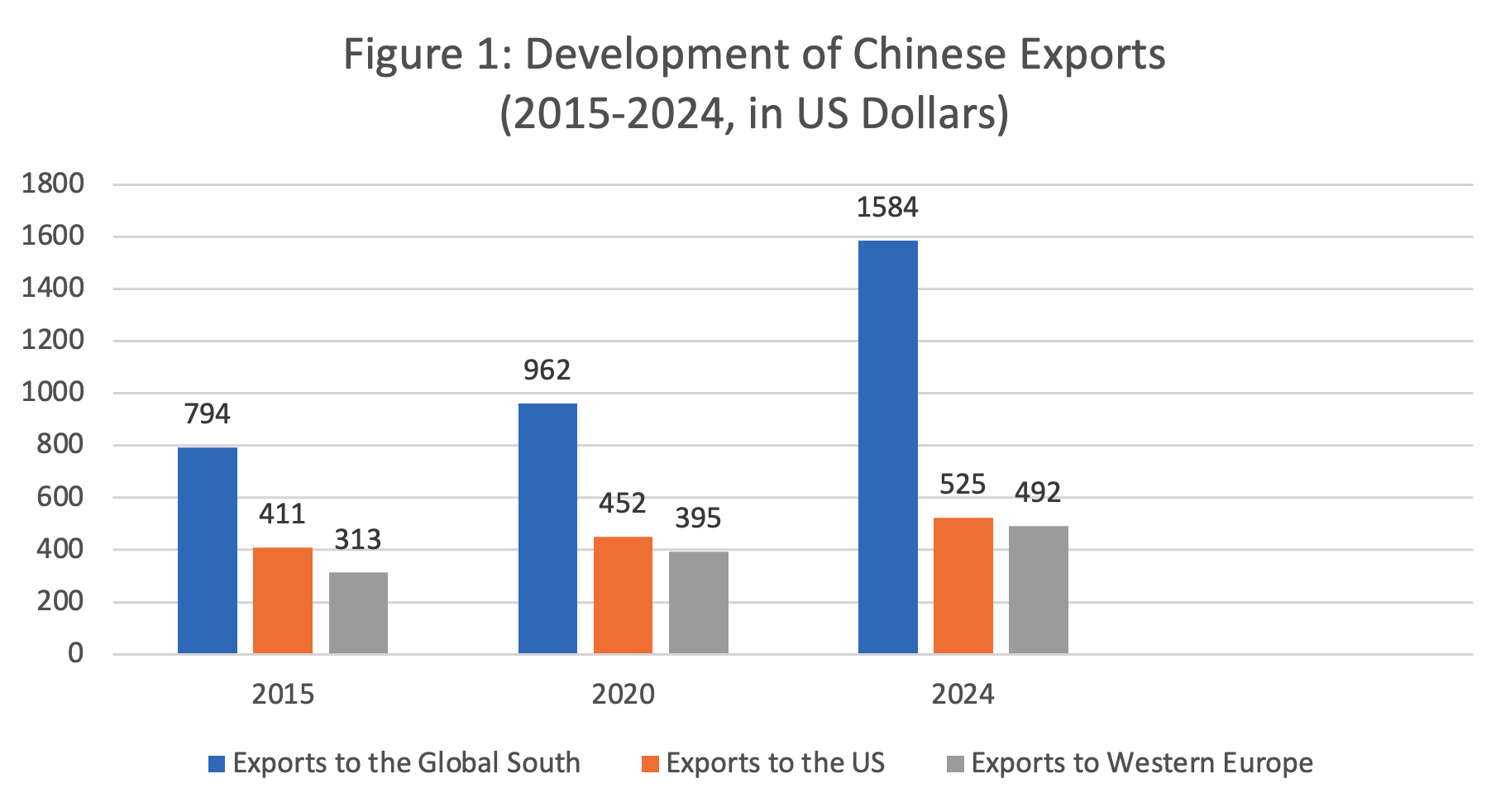
*Global South includes South and
Southeast Asia, the Middle East and Africa, Eastern Europe, Central Asia, and
Latin America.
Source: Chang, Charles et al., 2025[xviii]
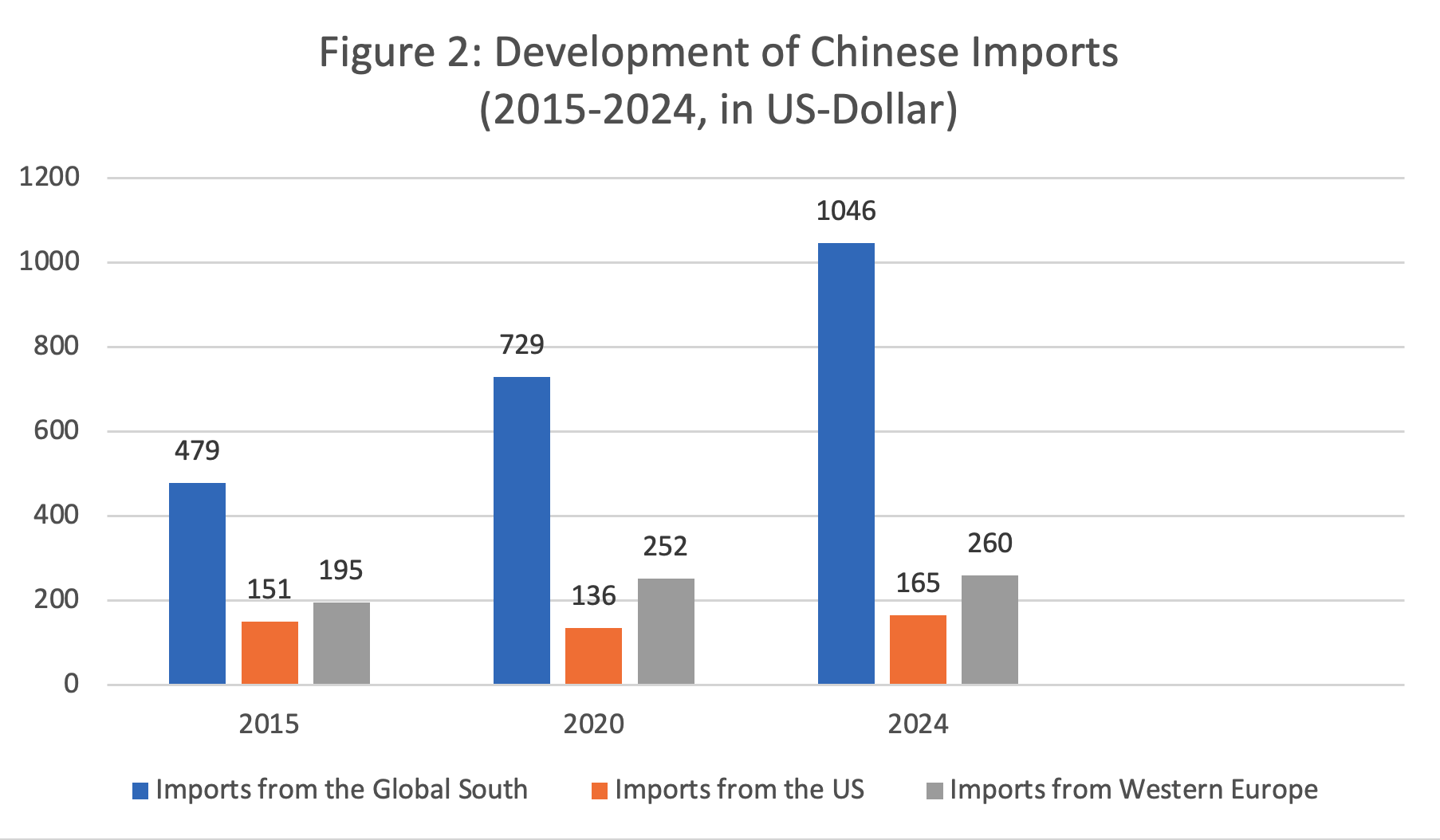
*Global South includes South and
Southeast Asia, the Middle East and Africa, Eastern Europe, Central Asia, and
Latin America.
Source: Chang, Charles et al., 2025[xix]
Furthermore, there has been a notable increase in Chinese direct investment, and a growing interest among Chinese entrepreneurs in establishing a presence in the Global South. Both of these factors are likely to continue in order to open up new markets and resources access and can help China to diversify and reduce the uncertainties and vulnerabilities caused by US tariffs. The increased exchange of goods is indicative of new economic dynamics, as well as of a newly emerging world order that is determined not only by state policy, but also by new patterns of everyday cultural, socio-economic networking and increased integration of China into the Global South.[xx]
China’s specific forms of cooperation and own institutional networks have enabled it to establish a significant sphere of influence, allowing it to act as a major player in its own right, particularly when engaging with smaller countries. This approach is partly consistent with existing international norms, such as trade, and partly follows different norms, including non-intervention, deviating from the prevailing logic of international relations.[xxi] On the one hand, this diversified international action demonstrates that China does not challenge the established international order in all areas. On the other hand, it offers an alternative to the established international rules of the game in numerous fields, especially for countries in the Global South.
China’s growing popularity in the Global South
Evidence of increasing Chinese influence and acceptance in the Global South also comes in the form of opinion polls such as those conducted by Pew Global Research, which demonstrate that China’s popularity – along with soft power and ability to shape norms of interaction – is increasing. At the same time, the popularity of the US and the EU is on a gradual decline due to a range of factors. These include the West’s perceived support for Israel in Gaza, which is unpopular in many majority Muslim countries. The Trump administration’s withdrawal of USAid programmes in Africa has also impacted perceptions of the US.[xxii] In addition, the Trump regime’s inconsistent application of tariffs, often perceived to be unfair, has further undermined the image of America as a responsible international actor, making China look like a paragon of calm and predictability in comparison.
The idea, now losing traction, that China might be generally unpopular worldwide stems from the assumption that the lack of support for China in rich countries occurs also in poor countries. But data from polling by the Pew Research Center (see Figure 3) show China’s favourability in low-income countries was approaching that of the US in 2024 and was much higher than in the Global North.
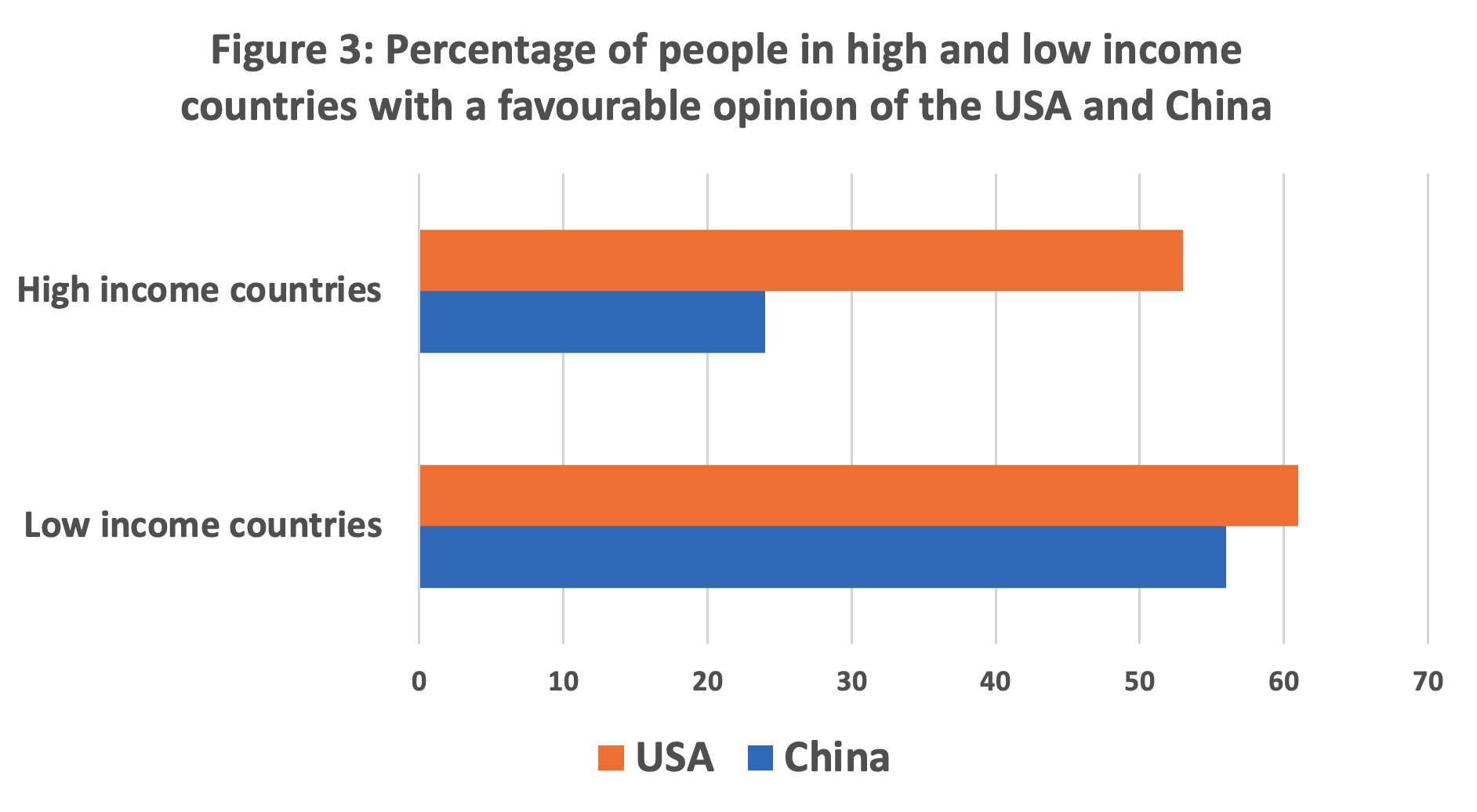
Source: Pew Research Center, June 2024[xxiii]
Furthermore, there was a remarkable shift in global public opinion from 2024 to 2025. A Nira Data poll of 96 countries conducted in April 2025 showed that there was a significant shift towards China compared to 2024. Remarkably, the data reveal that 76 out of 96 countries now hold a more favourable view of China than the US. In addition, perceptions of the US fell dramatically from 2024 to 2025 from a net positive (+22 per cent) to a net negative (-5 per cent). During the same period, perceptions of China rose from +5 to +14 per cent, meaning that for the first time, more people worldwide now have a positive perception of China than of the US, while Russia is still seen negatively, but not much more negatively than the US (see Figure 4).
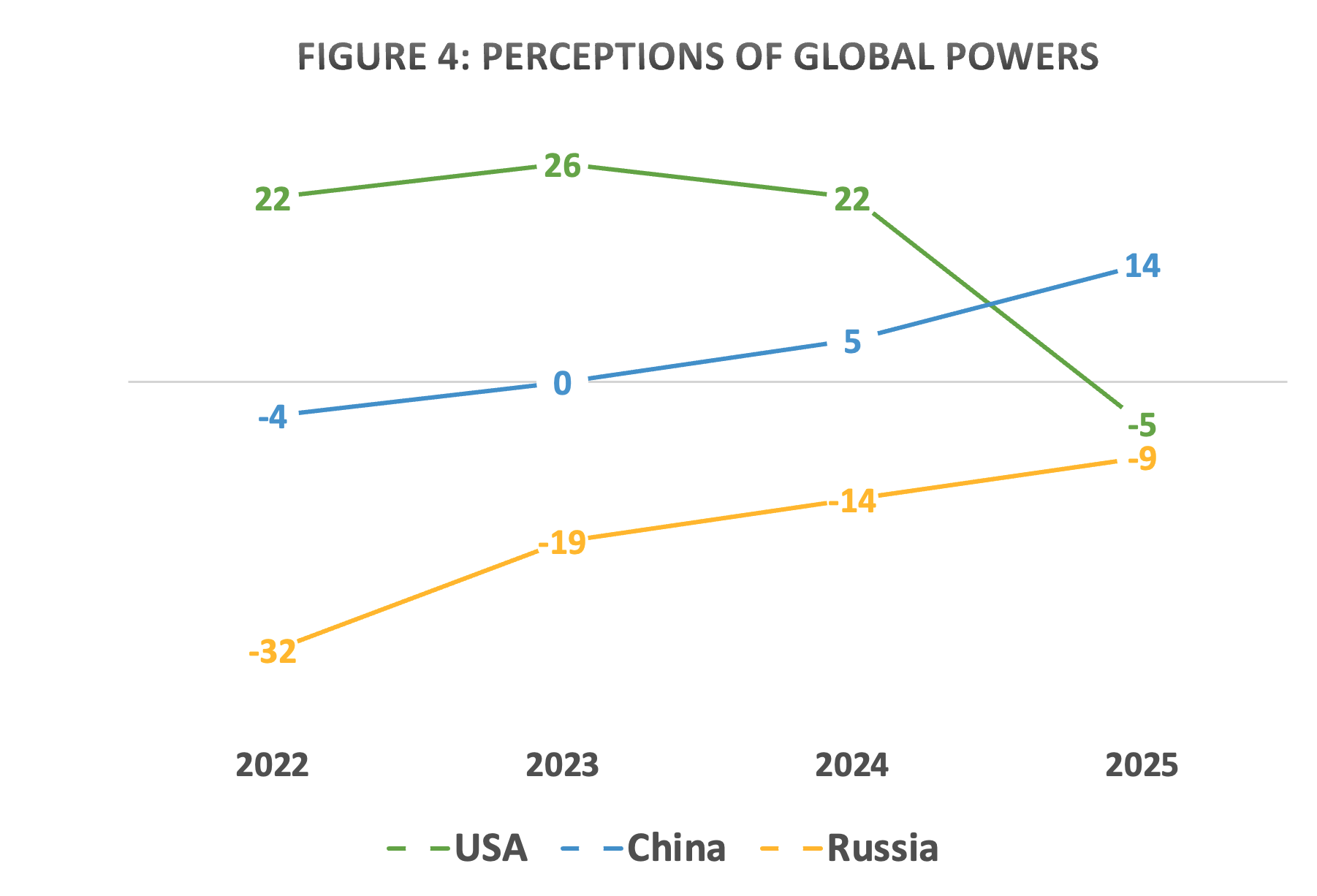
Source: based on surveys conducted by Nira Data, published May 2025[xxiv]
In terms of soft power, China has developed numerous mechanisms for positive self-presentation over the past two decades. These include the professionalisation of foreign communications, the creation of the ‘China’ brand and the establishment of Confucius Institutes. Unlike in many Western countries, these institutes are often highly active in the Global South, representing an important socio-cultural connection to China. The country’s opening up through the introduction of visa-free entry for citizens of 70 countries worldwide has also contributed to a more positive perception in many parts of the world. Consequently, in countries of the Global South, China is often viewed as a partner, problem solver and financier that imposes few conditions. To name just one example of the many similar rankings, Brand Finance’s Soft Power Index measures the global perception of nations, showing how attractive a country is in terms of culture, education, diplomacy, economy and governance. According to this index, China has now overtaken the UK and is second only to the United States. Looking at developments over the past few years, an interesting shift in soft power influence has emerged: While perceptions of the United States are turning negatively, China is managing to improve continuously. This can be attributed to strategic efforts to enhance its global image, such as major infrastructure investments (Belt and Road), a focus on sustainable development, well-known technological products, communication initiatives and opening up to visitors after the pandemic. China seems to have mitigated previous weaknesses in perception, with respondents viewing it positively in terms of its good relations with other countries and cultural appeal. In this respect, China is not only benefiting from possible (current) weaknesses of the USA in this regard.[xxv]
Conclusion: How should the EU react?
Clearly, it is no easy task for the EU to formulate a response to China’s growing influence in the Global South. There is a tug-of-war between the logically opposed visions of threat and opportunity which tends to stymie decision-making.[xxvi] China’s huge size casts a giant shadow over the EU whether one thinks in terms of economic cooperation or strategic competition. There is no clear route out of this conundrum; nevertheless, one urgently needs to be found if the EU is to remain relevant in the face of the China-led attempts to remake the global order. This includes the urgent need of more coherence among the different positions and actors in the EU.
One solution which may satisfy both sides of the argument is to differentiate areas where the EU must logically oppose China and those in which cooperation is possible. For instance, the EU’s foundational normative principles concerning democracy and human rights mean that it cannot find common ground with Chinese support for authoritarian regimes. Standing up for these principles in the arena of global public opinion means trying to counter Chinese political influence. On the other hand, in the face of global environmental catastrophe there is no logical reason not to be sympathetic to China’s ongoing efforts to develop sustainable renewable energy solutions. Even if state support for Chinese companies is seen (from the EU’s side) as subverting free market norms, the pace of change being achieved by the Chinese is remarkable.[xxvii] Importantly, China’s huge investments in renewables serve the common human goal of alleviating the climate crisis. Surely, this must matter to the EU, and so come to be seen as an area of potential cooperation. In other words, it may be possible to develop a coherent strategy of competition-cooperation variance dependent on distinguishing between different policy fields. However, it should be noted that many EU Member States currently view non-European countries primarily either as customers from whom profits can be made through trade, tourism and investment, or as adversaries who must be contained through foreign and security policy, intelligence measures, etc., rather than as potential cooperation partners. This is an unfavourable starting point for considering the concerns of various non-European countries in a differentiated manner, or for targeted cooperation in appropriate policy fields.
Europe should also focus on the strengths that distinguish it from China. In particular, the long-established contact between transnational civil societies in Europe and the Global South should be mentioned here. Those groups are in constant and productive exchange with reference to certain policy areas and therefore represent an important bridge. Strengthening this exchange, which takes place on an equal footing and is often strongly committed to climate policy goals, fairer global trade, compliance with UN human rights standards and SDGs, would be an important sign of European engagement in the Global South – where civil society is often under pressure. Europe is also still an important target region for international students from the Global South – whose efforts often fail due to financial hurdles, visa problems and a lack of integration into the European labour market. Here too, more systematic support could create valuable long-term bridges between Europe and the Global South, and could counteract China’s Global South narrative – the idea of China as an “understanding partner” of a whole Global South, opposed to the “hegemonic West”.
Be this as it may, what needs to happen now is to initiate a vigorous debate on how to react to China’s alternative international order building. Gone are the days of labelling Global South countries as basket cases in need of charitable aid. Now, allied with China, many of them are actively trying to remake global institutions, believing that the current Western-led international system does not serve their interests. The EU needs to wake up to this shift in world affairs and begin finding ways to improve relations with at least some Global South countries. For instance, as a practical measure, countries could be categorised according to the degree, along a spectrum, to which they may be more or less amenable to intensified diplomatic approaches.
At the same time, it is essential to engage with China on at least some levels rather than trying to keep the dragon at arm’s length: it is simply not possible to try to snub or shut out China – as some elements in the EU would advise – given its economic size and growing political clout, not to mention the presence of sizeable and energetic Chinese diasporas in the EU. Yes, engagement will have costs; but the impracticality of trying to ‘decouple’ from China is now all too apparent. Meanwhile, ‘derisking’ has not yet, despite much discussion, been formulated into a clear strategic approach. Finding a coherent China strategy which engages with China as it is rather than how we would like it to be is now a necessity.

 | Funded by the European Union. Views and opinions expressed are however those of the author(s) only and do not necessarily reflect those of the European Union or European Research Executive Agency (REA). Neither the European Union nor the granting authority can be held responsible for them. |
[i] Summers, T. (2016) China’s ‘New Silk Roads’: sub-national regions and networks of global political economy. Third World Quarterly, 37(9), 1628-1643.
[ii] Breslin, S., & Garlick, J. (2024) China’s new global governance institutions. 2 April, EuroHub4Sino Policy Paper 2024/2. https://eh4s.eu/publication/Chinas-new-global-governance-institutions. Accessed 30 August 2025.
[iii] Waruru, Maina (2024) Numbers of African students in China expected to grow as ties increase . The Pie, 1 March, https://thepienews.com/numbers-of-african-students-in-china-expected-to-grow-as-ties-increase/. Accessed 20 December 2025.
[iv] Xu, W. (2023) Educating global Africans: possibilities of Chinese language learning in international higher education. Humanities and Social Science Communication, 10(604). https://doi.org/10.1057/s41599-023-02125-8.
[v] Kallio, J. (2024) China's Global Initiatives. Common Security Service of National Interest, FIIA Briefing Paper (online), htps://fiia.fi/en/publication/chinas-global-initiatives. Accessed 13 October 2025.
[vi] Xinhua (2025). Global South media, think tanks pool wisdom to improve global governance. 14 November. http://english.scio.gov.cn/m/in-depth/2025-11/14/content_118176656.html. Accessed 18 December 2025.
[vii] Garlick, J. (2024) A few more BRICS in the wall: how to respond to China and Russia’s emerging bloc of nations. 15 April, EuroHub4Sino Policy Paper 2024/5. https://eh4s.eu/publication/a-few-more-brics-in-the-wall-how-to-respond-to-china-and-russias-emerging-bloc-of-nations. Accessed 30 August 2025.
[viii] Garlick, J. (2025) Beyond Central Asia: the ever-expanding influence of the Shanghai Cooperation Organization. 21 February, EuroHub4Sino Policy Paper 2025/2. https://eh4s.eu/publication/beyond-central-asia-the-ever-expanding-influence-of-the-shanghai-cooperation-organization. Accessed 30 August 2025.
[ix]China Daily, Editorial: Openness, inclusiveness and cooperation BRICS’ solution to issues in volatile world, 8 July 2025.
[x] Garlick, J., & Qin, F. (2023). China’s ‘do-as-I-do’ paradigm: practice-based normative diplomacy in the global South. The Pacific Review, 37(5), 985–1015. https://doi.org/10.1080/09512748.2023.2290619.
[xi] Global Times (2025). Xi proposes Global Governance Initiative. 1 September. https://www.globaltimes.cn/page/202509/1342284.shtml. Accessed 8 September 2025.
[xii] Chen, L., and Chu, M.M. (2025) China’s Xi pushes a new global order, flanked by leaders of Russia and India. Reuters, 1September. https://www.reuters.com/world/china/chinas-xi-pushes-new-global-order-flanked-by-leaders-russia-india-2025-09-01/. Accessed 8 September 2025.
[xiii] Kallio, J. (2024) China's Global Initiatives. Common Security Service of National Interest, FIIA Briefing Paper (online), htps://fiia.fi/en/publication/chinas-global-initiatives. Accessed 13 October 2025. Chi, Y. Yue, Z. (2025) Beyond Western Dominance: The Global Development Initiative as China's Normative Contribution to Strengthening UN Development Governance. Journal of International Economy and Global Governance, 2(4), 4-22.
[xiv] Observatory of Economic Complexity (2025). China, Exports, Historical Data. https://oec.world/en/profile/country/chn. Accessed 30 August 2025.
[xv] Ember Energy (2025). China’s Solar PV Export Explorer. https://ember-energy.org/data/chinas-solar-pv-export-explorer/. Accessed 30 August 2025.
[xvi] Body, P. (2025). Tailored technologies: how Transsion came to dominate the African phone market. CKGSB Knowledge, 3 January. https://english.ckgsb.edu.cn/knowledge/article/tailored-technologies-how-transsion-came-to-dominate-the-african-phone-market/. Accessed 8 September 2025.
[xvii] Chang, C. et al. (2025) China Inc. heads to Global South in the age of tariffs, S&P Global (online), 19. Aug. 2025, htps://www.spglobal.com/en/research-insights/special-reports/china-inc-heads-to-global-south-in-the-age-of-tariffs. Accessed: 13 October 2025).
[xviii] Ibid.
[xix] Ibid.
[xx] Rofel, L. & Rojas, C. (2022) New World Orderings. China and the Global South, Durham: Duke Univ. Press.
[xxi] Murphy, D. C. (2022) China's Rise in the Global South. The Middle East, Africa, and Beijing's Alternative World Order, California: Stanford Univ. Press.
[xxii] Garlick, J., & Senz, A. (2025) Choosing to lose: how US and EU policy decisions contribute to greater Chinese influence in the Global South. 16 May, EuroHub4Sino Policy Paper 2025/5. https://eh4s.eu/publication/choosing-to-lose-how-us-and-eu-policy-decisions-contribute-to-greater-chinese-influence-in-the-global-south. Accessed 30 August 2025.
[xxiii] Silver, L. 2024. “More people view the U.S. positively than China across 35 surveyed countries.” Pew Research Center, 9 July. https://www.pewresearch.org/short-reads/2024/07/09/more-people-view-the-us-positively-than-china-across-35-surveyed-countries/. Accessed April 24, 2025.
[xxiv] Nira Data, Democracy Perception Index 2025, p. 41. https://www.niradata.com/dpi. Accessed 30 August 2025.
[xxv] TPBO (2024). China – Country Performance, Brand Strength and Reputation, https://placebrandobserver.com/china-country-performance-brand-strength-reputation/. Accessed 18 December 2025.
[xxvi] Pavlićević, D. (2018). ‘China Threat’ and ‘China Opportunity’: Politics of Dreams and Fears in China-Central and Eastern European Relations. Journal of Contemporary China, 27(113), 688–702. https://doi.org/10.1080/10670564.2018.1458057.
[xxvii] Watts, J. (2025) ‘There is only one player’: why China is becoming a world leader in green energy. The Guardian, 7 September. https://www.theguardian.com/environment/2025/sep/07/china-fossil-fuel-us-climate-environment-energy. Accessed 7 September 2025.