
Key takeaways
- After submitting its updated National Determined Contribution (NDC) with only modest improvements, China’s role at recent COP30 was ambivalent: restrained in formal negotiations, yet highly active in the non-negotiation space.
- China’s active engagement in promoting the just transition mechanism at the COP was tempered by its strong reluctance to accept any commitments or references to a transition away from fossil-fuels and climate funding. According to its own reporting, China has made significant contributions to climate finance, though transparency remains limited.
- In the non-negotiation space, China focused on showcasing its implementation efforts including its achievements within South–South cooperation, and its major advances in green technology — developments that non-Chinese visitors often used as grounds to portray China as a global climate leader. China, however, remained distinctly cautious and reportedly pushed back against being labeled a leader in climate policy.
- China’s civil sector contribution to COP was limited, with NGOs aligning closely with government priorities and exerting far less pressure on China’s climate commitments than civil sectors elsewhere. The Chinese business sector, on the other hand, was highly active with many technology companies attending COP to promote their technological innovations.
- While the EU continues to rely primarily on standards and regulatory approaches in its external climate policy and fails to engage more effectively with the priorities and perceptions of Global South partners, China’s popularity appeared to increase with the Chinese pavilion being heavily visited throughout the conference. Furthermore, China’s restrained pledges at COP such as in the topics of fossil fuel transition or contribution to financing did not seem to diminish its positive standing among Global South countries.
Introduction
The genesis of China’s participation in global climate politics has undergone a drastic transformation over the past decades. While China rejected binding climate protection measures during the 2009 Copenhagen Climate Change Conference, it soon shifted its stance and is now increasingly regarded as a major contributor to global climate governance.[1] Throughout this evolution, China has consistently distinguished itself from the developed countries, which, due to historical circumstances, have produced far more greenhouse gas emissions.
China has long viewed and continues to view itself as a developing country, insisting on the principle of “common but differentiated responsibilities,” introduced in the early 2000s. This principle argues that developing countries should be allowed to prioritize economic development over environmental protection. Since industrialized nations have been emitting greenhouse gases for a much longer period, they are expected to take the lead in climate protection efforts and support developing countries through technology transfer and environmental financing.[2]
As China came under growing international pressure due to its high emissions, it reinforced its stance by forming alliances with other countries: first within the Group of 77, later in the BASIC group (Brazil, South Africa, India, and China), and eventually in the coalition of Like-Minded Developing Countries.[3] Despite these strategic partnerships, China agreed at the 2013 climate negotiations in Warsaw (COP19) to the framework of Intended Nationally Determined Contributions (INDCs), thereby committing itself to nationally determined measures for reducing emissions. In 2015, China set specific national targets through 2030, which were updated again in 2020. Recently, in early November 2025, China released its updated NDC outlining targets for 2035.
Notably, China has already surpassed two of its 2030 NDC goals. These include the expansion of wind and solar capacity, which reached 1,673 GW by June 2025[4]—well above the 2030 target of 1,200 GW—and the increase in forest stock volume (an increase in plantation tree cover, which does not necessarily reflect sustainable forest growth[5]), originally set to grow by around 6 billion m³ from 2005 levels (to approximately 12.5 billion m³), but already exceeding 20 billion m³ in 2024.[6] China is also close to meeting its goal of raising the share of non-fossil fuels in primary energy consumption to “around 25%.”[7]
On the downside however, not only have studies in recent years questioned the actual emission footprint of green technology produced in the highly coal power dependent China[8], but they also raised concerns in Europe and other regions about China’s strategic interest in dominating emerging markets for “green technologies”[9] such as renewable energy, lithium-ion batteries, and electric vehicles.[10]
Nonetheless, China’s rapid development in technologies serving for climate adaption has led to increasingly optimistic perspectives and assumptions worldwide about whether China could become a global climate leader. Thus, this policy paper examines China’s role and behavior at the recently held and highly significant COP30 in order to elucidate China’s current position within broader global climate politics. For this purpose, we conducted a series of interviews between November 2025 and January 2026 with COP participants involved either in the negotiations or in the conference’s side events. The interviewees included representatives from NGOs, government officials at the local, national, and supranational levels, as well as members of research institutions. Regarding the nationalities of the interviewees, they included both Chinese and non-Chinese participants, as well as visitors from countries in the Global North and the Global South, in order to capture the broadest possible range of perspectives from all attendees. All interviews and data were anonymized.
Before COP30 – Limited ambition in China’s 2035 NDC
In the lead-up to COP30, countries released their new National Determined Contributions (NDC), outlining their climate ambitions for the coming decade. Soon after China published its NDC, initial analyses and reports described it as a “missed opportunity” to assume global climate leadership, noting that China is not filling the vacuum left by the United States.[11]
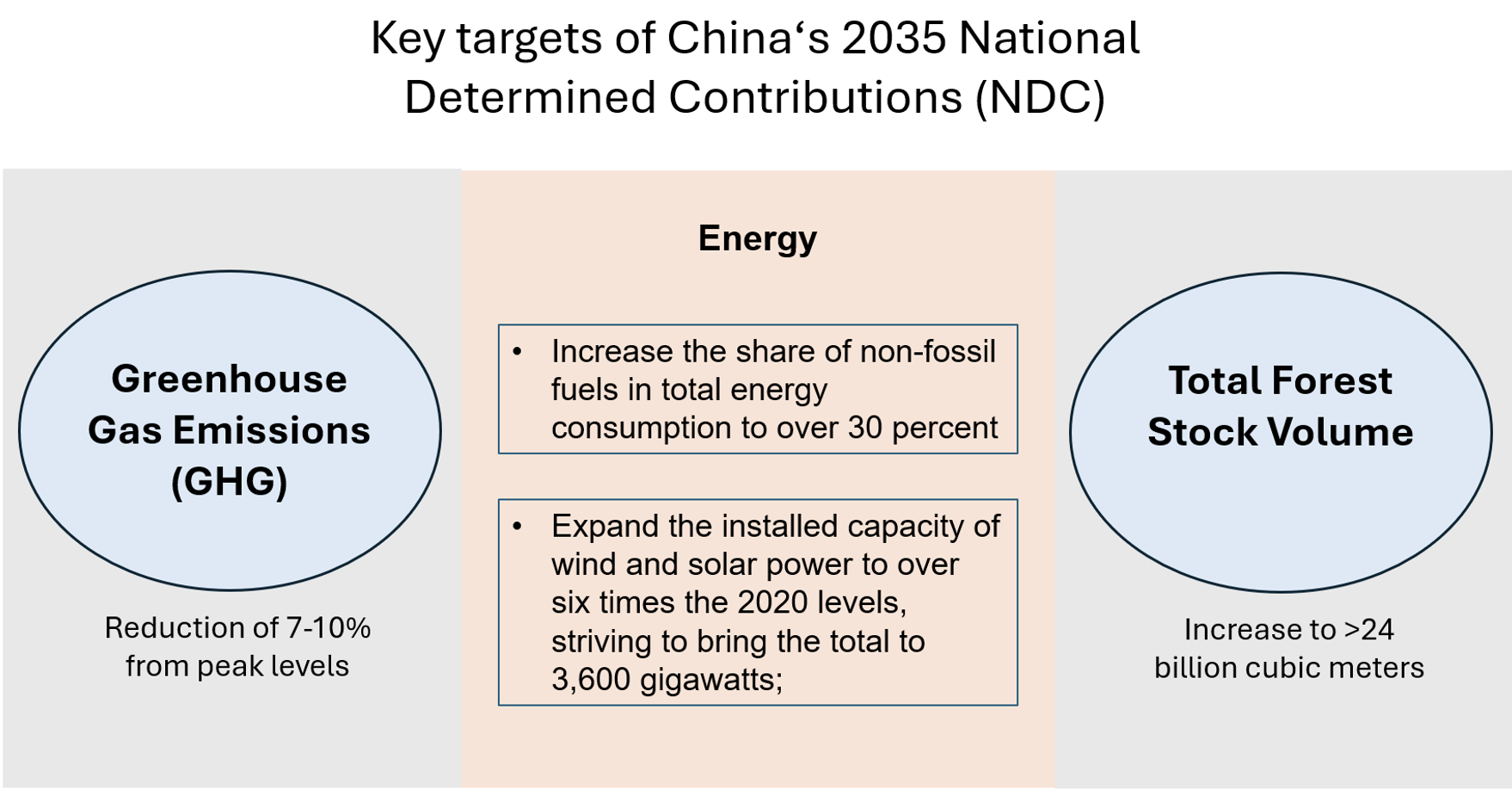
Fig.1: Own graph based on China’s 2035 NDC[12]
China’s 2035 NDC includes, for the first time, an absolute GHG emissions reduction target calling for a 7–10% decrease from peak levels by 2035. It also provides updated renewable energy goals, including a higher share of non-fossil fuels in total energy consumption and expanded installed capacity for wind and solar power, as well as a revised target for increasing forest stock volume. Although the targets in China’s 2035 NDC represent a modest improvement, they fall far short of what would be required to meet the goals of the Paris Agreement, namely limiting global warming to at least 2°C, ideally to 1.5°C. Estimates suggest that China’s new emissions reduction target of 7–10% by 2035 is not sufficient for the limitation of global warming to maximal 2°C, but instead would contribute to the world going on a trajectory of roughly 3°C warming by 2100, with catastrophic climate impacts.[13]
Furthermore, experts have raised doubts about the credibility and feasibility of the new NDC targets. For instance, the GHG emissions target contains a significant loophole, as it does not specify a peak-emissions year. Likewise, the impact of the renewable-energy targets is limited in the absence of a cap on fossil fuels – or even any reference to one.[14] Thus, as one energy expert noted, if China’s emissions peak were to occur as late as 2040, the country could still technically meet the 7–10% reduction target for 2035, while still allowing emissions to rise up until 2040.[15]
Following the publication of the updated NDC, the two-day “high level segment” at which the leaders of all countries give speeches on their views and plans of climate change were marked by China emphasizing that it remains committed to climate actions including a green and low-carbon transition, yet lacking any reference to China’s contribution to climate finance or its carbon intensity reduction progress. Instead, Vice Premier Ding Xuexiang stressed repeatedly that developed countries to which China still doesn’t count itself should contribute most to emission reduction, finance commitments, as well as technology and capacity building. Ultimately, he also criticized that the EU’s and US’ decoupling measures include restricting imports of "green products" such as solar panels and electric vehicles—actions that, from China’s perspective, are inconsistent with the climate progress and leadership role the EU claims.[16] As in the case of India and the United States, China’s head of government, Xi Jinping, was not present in the high-level meetings and negotiations drawing criticism in international media, given that these three countries are currently the world’s largest environmental polluters.[17]
During COP30 – A Birthday without Presents
Despite COP30 marking both the 30th anniversary of the United Nations Framework Convention on Climate Change (UNFCCC) Conference of the Parties (COP) and the 10th anniversary of the adoption of the Paris Agreement, which aims to limit global warming to ideally 1.5°C and at most 2°C, the overall outcome was rather sobering and fell short of delivering more concrete commitments and actions.
The U.S. government’s absence from COP30, combined with China’s highly publicized leadership in green technologies such as renewable energy, had sparked speculation about whether China would assume a leadership role at the climate summit. [18] Contrary to these expectations, during COP30, several Chinese climate officials rejected this characterization[19], and the term “leader” was reportedly more used by non-Chinese representatives and visitors attending events at the Chinese pavilion.[20]
This aligns with the general trend of more international, often non-Chinese observers attributing certain achievements, optimistic projections, or claims of leadership to China, while China responds very cautiously or avoids confirming them. A recent example is the discussion about a potential early emissions peak of China.[21] While in late 2024 and early 2025 numerous international experts and think tanks speculated about China reaching its carbon-emissions peak and shared optimistic prognoses, China did not officially respond to those claims.[22] During COP30, China rather presented itself simply as a “committed actor and active contributor to green and low-carbon development”.[23]
When looking at the two distinct spheres of activity at the COP – the Blue Zone for official delegations on the one hand, and the Green Zone, which is open to the public and focuses on dialogue among civil society, the private sector, and governments on sustainable solutions, on the other hand – China’s presence, level of activity, and degree of ambition appeared distinct.
Reserved in Negotiations
In the negotiations at COP30, China offered little substantive input, let alone a leadership role. Observers noted that China, despite being the world’s largest emitter, maintains a strong view that climate change is primarily a problem caused by developed countries, which should take the lead in addressing it.[24] Despite still being considered a developing country under the UNFCCC, more and more countries have called for China to shoulder greater responsibility due to its growing economy and emissions.[25] At COP30, China primarily called for increased climate finance from developed countries as part of the Like-Minded Developing Countries (LMDC) group and advocated for its inclusion on the summit’s agenda. In the second week, China put forward a proposal for a “practical roadmap” to guide developed countries in meeting the $300 billion New Collective Quantified Goal (NCQG) climate-finance target. The demand ultimately resulted in the adoption of a “two-year work programme on climate finance,” in which, however, developing countries are also required to contribute.[26]
Most notably, China didn’t make any pledge to invest into Brazil’s new forest fund, the Tropical Forest Forever Facility (TFFF). After news media had reported in summer of 2025 that China could be interested to contribute, China did not make any further clarification to why it did not invest.[27] Chinese reports state that, since 2016, China has provided and mobilized over $24.5 billion to support climate projects in developing countries. However, these figures come without any explanation of how they were calculated or what the investments entailed, reflecting the broader lack of transparency surrounding Chinese-administered climate funds.[28]
Another major topic at COP30 was the issue of Unilateral Trade Measures (UTMs), which China openly opposed, describing them as a “new injustice”. [29] UTMs include tariffs and similar instruments that impose costs on imports based on their embedded greenhouse-gas emissions. China was not alone in its stance; developing countries in particular have voiced their objections earlier in 2025.[30] While such measures are intended to create global incentives for low-emission production, many developing countries—including China—argue that they exacerbate inequality and hinder the export and global dissemination of green technologies, such as renewable-energy equipment and electric vehicles.[31]
Additionally, China strongly advocated at COP30 for the development of the Just Transition Mechanism, which is intended to provide technical assistance, foster international cooperation, and support partnerships to address implementation gaps. The newly established “Just Transition Work Programme” (JTWP) was hailed by many civil-society groups as a “victory,” as it creates an institutional mechanism that can serve as a centralized hub for supporting just transitions worldwide. However, the drafting of the final text saw multiple disagreements of China with both developed countries and developing countries.[32]
Firstly, the G77/China called for discussing UTMs within the framework of the JTWP, a proposal supported by the Arab Group and Russia.[33] This was opposed by developed countries, particularly the EU, which argued that UTMs fall outside the scope of the JTWP discussions and proposed addressing export restrictions on raw materials essential for clean technology and energy.[34]
Secondly, regarding the issue of transitioning away from fossil fuels, there were disagreements over what should be included in the text. China opposed the inclusion of a paragraph that “recognized” the “risks arising from the extraction and processing of critical minerals”.[35] Notably, this put China at odds with several countries in the LMDCs and the Africa Group, who indicated that references to critical minerals were important to them. Ultimately, China prevailed in its position, and the final text approved in the closing plenary did not include any reference to critical minerals, transitioning away from fossil fuels, or trade measures.[36]
In general, China’s contribution to fossil-fuel transition negotiations at COP30 was minimal. Although China faced significant pressure regarding its emissions-mitigation approach, it did not join the calls for developing a roadmap away from fossil fuels, which were ultimately driven mainly by Colombia and the Netherlands.[37] China also opposed efforts to place emphasis on the 1.5°C temperature limit, “requesting the entire Paris Agreement temperature goal…be mentioned”.[38] In an interview, Chinese climate envoy Liu Zhenmin explained that the country considered a fossil-fuel roadmap “unfeasible” because, from China’s perspective, the proponents of such a roadmap are too focused on rapidly phasing out fossil fuels without giving sufficient consideration to alternative energy sources. He expressed concerns that this would threaten energy security, economic growth, and social stability.[39]
However, China was keen in strengthening the view that it is China’s clean-tech economy – rather than its climate diplomacy – that will be the real force shaping global climate action in the years ahead.[40] China showcased this largely through its activities in the non-negotiation space, which played an important role in highlighting its “doer” profile and its existing clean-tech achievements.
Highly Active and Influential in the Non-Negotiation Space
In the Blue Zone of the COP, designed for informal networking and where each country can set up a national pavilion to host a series of side events showcasing work being done in that country, promoting it as a destination for climate-related investment, and often including third-country experts for knowledge sharing, China was noticeably more active and ambitious, exerting greater influence here than in the formal negotiations at COP30. Several think tanks and research institutes had reported that a heightened attention had been given to the China Pavilion.[41]
Many of the 19 thematic side events, 14 featured activities, and 4 exhibitions revolved around the core theme of green technological innovation, showcasing developments in renewable energy – such as solar and wind power – as well as e-mobility and battery technologies.[42] Further side events organized by China covered topics such as the national carbon market, subnational climate action, and South-South cooperation, among others. Hosted by various government departments and research institutions, the events also featured participation from a wide range of Chinese companies – many coming from the energy and clean-tech sector encomprising State Grid and major state-owned oil firms, private solar, wind, and battery manufacturers. [43] In addition, Chinese automakers provided electric vehicles for use during the negotiations, and companies including Tencent, Three Gorges, Longi, and CATL presented contributions to climate- and environment-related technology. [44]Subsequently, some media outlets criticized China for leveraging the conference as a business platform that serves its commercial interests.[45]Nevertheless, the implementation-focused events, which included numerous presentations of “best practices,” were highly appreciated by non-Chinese attendees and prompted many of them to attribute a leadership role to China. Reportedly, many delegates from Global South countries were interested in China’s provision of clean-energy technologies[46]and the practical experiences shared with regard to a rapid transition.[47]
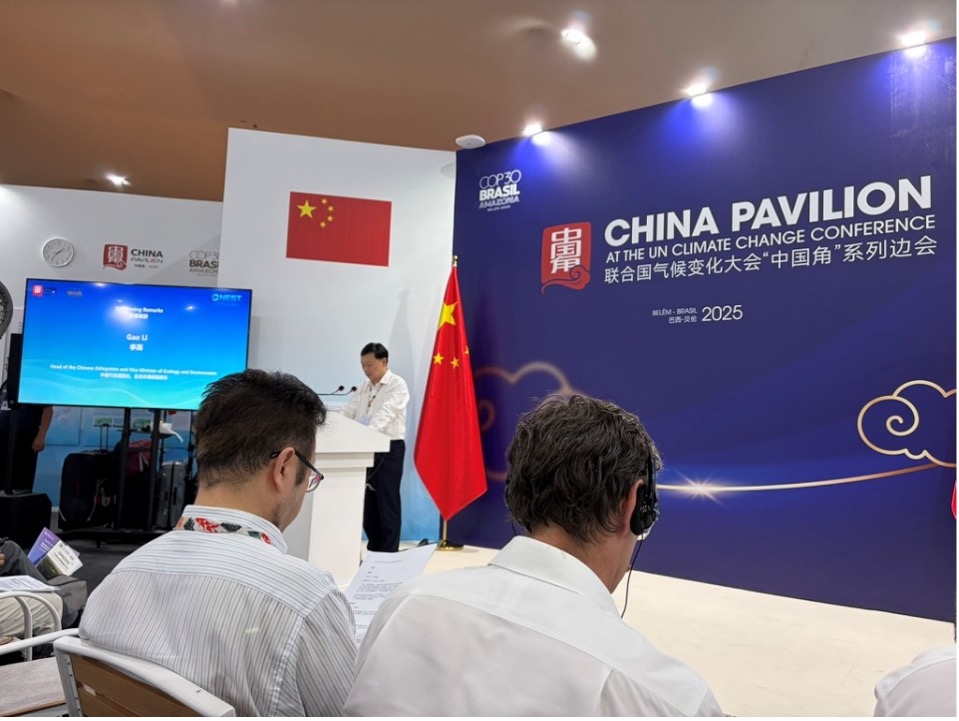
Fig.2: Side-event at the Chinese Pavilion (Photo taken by COP visitor)
South-South cooperation was given a prominent role at the Chinese pavilion. On the first day of COP30, the pavilion hosted a “high-level summit” on the topic, signaling China’s emphasis on listening to the needs of developing countries – a strength often highlighted in comparison to the EU. China also signed multiple climate agreements with other Global South countries and launched initiatives such as a clean-stove program with Kenya and Malawi. Visitors from Global South countries frequently attended the pavilion, with the South-South cooperation session being particularly well-attended.[48] In this way, China leveraged the COP to expand its global network, including the promotion of its green and renewable energy technologies and companies.[49]
Another key factor behind China’s high influence and popularity in the non-negotiation spaces of the COP was the design of its pavilion. Since its first launch in 2011, the Chinese pavilion has undergone a remarkable transformation from a simple, closed white space accessible only by appointment to a highly welcoming and attractive venue featuring networking areas, a buffet, a stage, and numerous posters and displays. This evolution reflects the Chinese government’s growing focus on non-negotiating arenas of the COP and its desire to present itself as a popular, engaging, and ambitious actor. By showcasing traditional cultural elements and souvenirs, the pavilion drew large crowds throughout the conference, with visitors lining up for snacks, souvenirs, and participatory photo and video opportunities, standing out in popularity compared with neighboring pavilions. [50]
Domestic participation and media coverage of COP30 in China
While civil society, particularly indigenous communities in South America, played a more active role at this year’s COP than in previous years and received substantial media coverage in many countries, increasing control over the non-profit sector in China have significantly constrained NGO and environmental activism over recent years. China’s limitation on civic self-organization has shaped China’s contributions to global climate negotiations and within China’s pavilion, environmental NGOs and institutions largely aligned with government positions, exerting far less pressure or critique than their counterparts in liberal countries.
A main difference in media coverage of the COP lies in Western media largely criticizing COP for limited results and their own countries’ shortcomings, while Chinese media focused on positive outcomes, highlighting China’s role and contributions, occasionally noting that developed countries – meaning "the West" – could have done more.[51]Moreover, reports particularly highlighted the COP’s success in engaging all nations, especially those most affected, while emphasizing China’s contributions and its commitment to ‘strive to do better,’ often paired with its standard political slogans.[52]
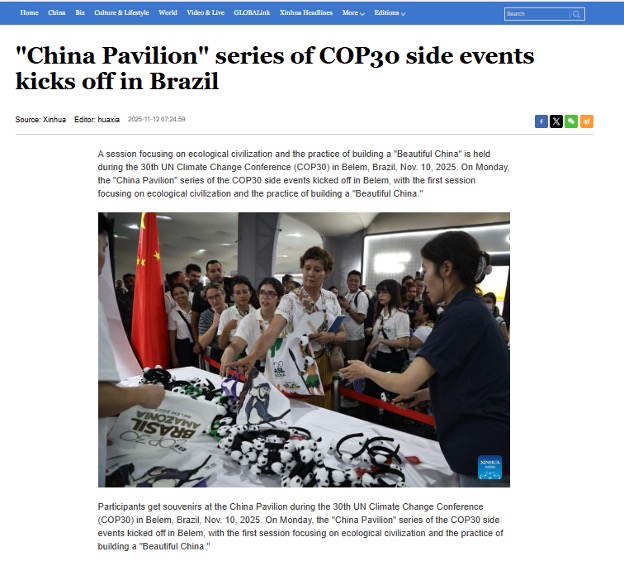
Fig.3: Screenshot of a Chinese news media article depicting visitors lining up for souvenirs at the Chinese Pavilion[53]
Domestically, COP and China’s contributions to it were broadly covered by mainstream media, however most followed by energy researchers and professionals, who closely track China’s environmental policy developments. However, the UN’s strategy of appointing prominent figures as climate ambassadors – such as the young actor Ding Yuxi serving as a special UN media commissioner – also reached parts of the general public, who engaged with his speeches and COP-related content, often sharing it on Chinese social media. [54]
After COP30 – China Remains Popular
Despite China’s limited engagement in areas such as mitigation, finance, and fossil fuel negotiations, its popularity within the global community – especially among developing countries – does not appear to have been shaken. This may be partly due to China’s strong promotion and visibility, which reached a peak at COP30.
Furthermore, the trend of the EU’s declining popularity and the Global South increasingly aligning with China continued,[55] despite China remaining largely silent on key issues such as fossil fuel caps and climate adaptation financing. Particularly, many Global South countries strongly requested climate adaptation funding, and China’s continued reluctance to contribute to UN-administered funds or the Brazilian Tropical Forest Forever Facility Fund, could have potentially risked its popularity.[56] A possible factor for the unshaken popularity may be related to the US’ retreat from the environmental arena, with China representing a strong and agile candidate who already showed increased performance in developing green technology products, thus serving as an exemplary contributor to climate action in the eyes of many developing countries.[57]
Thus, the popularity of China in the global climate action field seems to remain despite the overarching green paradox[58] of China leading the world in clean-tech manufacturing and electrification while still relying heavily on hard-to-abate industrial sectors and offering no firm commitments to near-term GHG emissions reductions or rapid decarbonization.[59]
Conclusion
Overall, this year’s COP not only marked historic milestones such as the 30th anniversary of COP and the 10th anniversary of the Paris Agreement, but also represented a critical turning point, as the international community had been watching closely to see whether China would assume a new leadership role in global climate policy following the complete withdrawal of the United States. China’s engagement at COP, however, was highly selective: it maintained a cautious stance in negotiations, offered no ambitious decarbonization pledges, and showed no change in climate finance contributions. Instead, its focus was firmly on green technology, bilateral agreements, advancing the concept of a just transition, and promoting green narratives already deeply embedded in China’s domestic and global governance. Thus, despite growing international efforts to position China as a global climate leader, there is little evidence that China is actually assuming or actively pursuing this leadership role.
Most importantly, this year’s COP has shown that the EU and China could complement each other well on adaptation and mitigation, especially if greater transparency were provided regarding Chinese climate funding and the actual emissions data associated with the production of Chinese green technologies.
COP30 once again highlighted China’s continued pattern of engaging closely with developing and emerging countries, approaching them as partners on equal footing, particularly through bilateral meetings and agreements. China held more than 40 bilateral meetings during COP30, following months of high-level exchanges with Brazil and other emerging economies within the framework of South-South cooperation.[60] The conference therefore illustrated where China currently positions itself within global climate politics: not as a leader and with as few binding commitments as possible, but as an active and equal partner to Global South countries. It offers concrete projects related to green technologies, while remaining notably vague about its own green paradox[61], including the timeline for fossil fuel phaseout.
| Policy Recommendations |
|

 | Funded by the European Union. Views and opinions expressed are however those of the author(s) only and do not necessarily reflect those of the European Union or European Research Executive Agency (REA). Neither the European Union nor the granting authority can be held responsible for them. |
[1] Jonathan Watts. 2025. “‘There Is Only One Player’: Why China Is Becoming a World Leader in Green Energy.” The Guardian, September 7. https://www.theguardian.com/environment/2025/sep/07/china-fossil-fuel-us-climate-environment-energy.
You, Xiaoying. 2025. “Can China Fill the Vacuum in Climate Leadership?” Reuters Media, November 4. https://www.reuters.com/sustainability/climate-energy/can-china-fill-vacuum-climate-leadership--ecmii-2025-11-04/.
[2] Harris, Paul G. 2011. China's Responsibility for Climate Change: Ethics, Fairness and Environmental Policy: Bristol University Press.
[3] Wu, Fuzuo. 2016. “Shaping China’s Climate Diplomacy: Wealth, Status, and Asymmetric Interdependence.” Journal of Chinese Political Science 21 (2): 199–215. https://doi.org/10.1007/s11366-016-9404-4.
Dahan, Amy. 2021. “How China’s Position Has Evolved in the COPs and on the Global Climate Geopolitical Stage.” Groupe d'études géopolitiques, 13–18. https://geopolitique.eu/en/articles/how-chinas-position-has-evolved-in-the-cops-and-on-the-global-climate-geopolitical-stage/.
[4] National Energy Administration. 2025. “Guojia Nengyuan Ju Juxing Xinwen Fabuhui, Jieshao Shang Bannian Kezai Sheng Nengyuan Bingwang Yunxing Qingkuang (国家能源局举行新闻发布会介绍上半年可再生能源并网运行情况) [The National Energy Administration Holds a Press Conference to Introduce the Grid-Connection and Operation Status of Renewable Energy in the First Half of the Year].” Accessed December 15, 2025. https://www.nea.gov.cn/20250731/36b5b3b74d344325bb67f38b8e943c18/c.html.
[5] Wiedenbach, Annette. 2024. “Since 2010, Forest Cover in China Has Doubled, Although Losses in Primary Forests Have Also Occurred.” Accessed December 15, 2025. https://www.climatescorecard.org/2024/11/since-2010-forest-cover-in-china-has-doubled-although-losses-in-primary-forests-have-also-occurred/.
Cao, Shixiong, Ge Sun, Zhiqiang Zhang et al. 2011. “Greening China Naturally.” Ambio 40 (7): 828–31. https://doi.org/10.1007/s13280-011-0150-8.
[6] Wei Yukun. 2025. “Woguo Jiji Wentuo Tuijin Tan Dafeng Tan Zhonghe, Yinling Lüse Didan Fazhan Qude Xin Chengxiao (我国积极稳妥推进碳达峰碳中和引领绿色低碳发展取得新成效) [Our Country Is Actively and Steadily Advancing the Goals of Carbon Peaking and Carbon Neutrality, Leading Green and Low-Carbon Development to Achieve New Results].” Xinhua, September 22. http://www.news.cn/20250922/50a35a1f389946478a4097509cc9e27f/c.html.
[7] Climate Action Tracker. 2025. “China's New Target Unlikely to Drive down Emissions.” Accessed December 15, 2025. https://climateactiontracker.org/press/chinas-new-target-unlikely-to-drive-down-emissions/.
[8] In recent years, a debate has emerged over potential emission intransparencies and the lack of reliable calculations regarding the true emissions associated with Chinese solar panels. Concerns focus on the production process, which due to China’s coal-dominated energy mix is believed to be significantly more emission-intensive than the one in Europe, while comprehensive and transparent data from China remain limited. See: Mariutti, Enrico. 2025. “The Limits of the Current Consensus Regarding the Carbon Footprint of Photovoltaic Modules Manufactured in China: A Review and Case Study.” Energies 18 (5): 1178. https://doi.org/10.3390/en18051178.
[9] The term green technology can be misleading, as it implies environmental friendliness without taking into account the full ecological impact of production, resource extraction, and disposal. What is more, there is no exact definition for technologies to be described as "green". The term is therefore placed in quotation marks.
[10] Altiparmak, Suleyman O., Cameron G. Thies, and Shade T. Shutters. 2025. “The Geoeconomics of Renewable Energy: China’s Strategic Positioning and Impact on the EU Market.” Sustainability 17 (13): 5998. https://doi.org/10.3390/su17135998.
Putri, Sylvia Octa, Nadira Mulistira Prana, Meita Qurrotu A’yuni, Shinta Aa Mintiara, and Muhammad Ivan Firdaus Achsan. 2025. “United States and China’s Interests on Green Geopolitical Strategy in Southeast Asia.” In Proceedings of the 8th International Conference on Business, Economics, Social Sciences, and Humanities - Economics, Business and Management Track (ICOBEST-EBM 2025). Vol. 340, edited by Lia Warlina and Senny Luckyardi, 78–87. Advances in Economics, Business and Management Research 340. Dordrecht: Atlantis Press International BV.
[11] Logan, Kate, and Shuo Li. 2025. “Unpacking China's New Headline Climate Targets.” https://asiasociety.org/policy-institute/unpacking-chinas-new-headline-climate-targets.
Climate Action Tracker. 2025. “China's New Target Unlikely to Drive down Emissions.” Accessed December 15, 2025. https://climateactiontracker.org/press/chinas-new-target-unlikely-to-drive-down-emissions/.
Zhang, Lim Min. 2025. “China’s Conservative Climate Targets a Missed Opportunity for Leadership: Analysts.” The Straits Times, September 25. https://www.straitstimes.com/asia/east-asia/chinas-conservative-climate-targets-a-missed-opportunity-for-leadership-analysts.
[12] People's Republic of China. 2025. “2035 Nian Zhongguo Guojia Zizhu Gongxian Baogao (2035年中国国家自主贡献报告) [2035 China Nationally Determined Contribution Report].” https://unfccc.int/sites/default/files/2025-11/2035%E5%B9%B4%E4%B8%AD%E5%9B%BD%E5%9B%BD%E5%AE%B6%E8%87%AA%E4%B8%BB%E8%B4%A1%E7%8C%AE%E6%8A%A5%E5%91%8A.pdf.
[13] Logan, Kate, and Shuo Li. 2025. “Unpacking China's New Headline Climate Targets.” https://asiasociety.org/policy-institute/unpacking-chinas-new-headline-climate-targets.
[14] Ibid.
[15] Zhang, Shuwei. 2025. “China’s New 2035 Climate Pledge: Credibility and Feasability Matter More Than Endless Debates on "Ambition".” Accessed December 15, 2025. https://www.linkedin.com/pulse/chinas-new-2035-climate-pledge-credibility-matter-shawn-shuwei-zhang-z1w8e/?trackingId=kvcCr13vTNKvFwIG3%2BZqyQ%3D%3D.
[16] n.a. 2025. “Address by Chinese Vice Premier Ding Xuexiang at Belem Climate Summit.” Accessed December 15, 2025. https://english.www.gov.cn/news/202511/07/content_WS690dd97cc6d00ca5f9a07668.html.
[17] Debre, Isabel, and Mauricio Savarese. 2025. “Leaders of World’s Biggest Polluters Are No-Shows as Heads of State Gather for UN Climate Summit.” CTV News, November 6. https://www.ctvnews.ca/climate-and-environment/article/leaders-of-worlds-biggest-polluters-are-no-shows-as-heads-of-state-gather-for-un-climate-summit/?utm_source=cbnewsletter&utm_medium=email&utm_term=2025-11-07&utm_campaign=Daily+Briefing+Leaders+speak+ahead+of+COP30+Norway+s+%243bn+TFFF+boost+UK+to+double-down+on+net-zero.
[18] Hilton, Isabel. 2025. “As U.S. And E.U. Retreat on Climate, China Takes the Leadership Role.” Yale E360, November 10. https://e360.yale.edu/features/china-climate-diplomacy.
You, Xiaoying. 2025. “Can China Fill the Vacuum in Climate Leadership?” Reuters Media, November 4. https://www.reuters.com/sustainability/climate-energy/can-china-fill-vacuum-climate-leadership--ecmii-2025-11-04/.
Sun, Yixian. 2025. “The World Needs Climate Change Leadership – It’s Time for China to Step up.” The Conversation. https://doi.org/10.64628/AB.qcnff4uwf.
Young, Holly. 2024. “Will China Become a Leader in Global Climate Action?” Deutsche Welle, November 21. https://www.dw.com/en/will-china-replace-us-as-leader-in-global-climate-action/a-70839105.
[19] Patel, Anika. 2025. “Q&A: Will China and the BRICS Fill the ‘Leadership Gap’ on Climate Change?” Carbon Brief, September 18. https://www.carbonbrief.org/qa-will-china-and-the-brics-fill-the-leadership-gap-on-climate-change/.
Liu, Hongqiao. 2021. “The Carbon Brief Interview: Prof Wang Yi and Prof Wang Zhongying.” Carbon Brief, December 10. https://www.carbonbrief.org/the-carbon-brief-interview-prof-wang-yi-and-prof-wang-zhongying/.
Watts, Jonathan, and Fiona Harvey. 2025. “China Doesn’t Want to Lead Alone on Climate Policies, Senior Adviser Warns.” The Guardian, November 19. https://www.theguardian.com/environment/2025/nov/19/china-doesnt-want-to-take-lead-on-climate-policies-alone-senior-adviser-warns.
[20] Evans, Simon et al. 2025. “COP30: Key Outcomes Agreed at the UN Climate Talks in Belém.” Carbon Brief, November 23. https://www.carbonbrief.org/cop30-key-outcomes-agreed-at-the-un-climate-talks-in-belem/.
[21] Senz, Anja, and Belinda Uebler. 2024. “Public Predictions About China’s Carbon Emissions Peak: Dynamics and Impacts.” https://eh4s.eu/publication/public-predictions-about-chinas-carbon-emissions-peak-dynamics-and-impacts.
[22] Shepherd, Christian. 2023. “China Is Close to Peak Emissions, but It Doesn’t Want to Talk About It.” The Washington Post, December 11. https://www.washingtonpost.com/world/2023/12/11/china-climate-emissions-peak-cop28/.
Senz, Anja, and Belinda Uebler. 2024. “Public Predictions About China’s Carbon Emissions Peak: Dynamics and Impacts.” https://eh4s.eu/publication/public-predictions-about-chinas-carbon-emissions-peak-dynamics-and-impacts.
[23] Evans, Simon et al. 2025. “COP30: Key Outcomes Agreed at the UN Climate Talks in Belém.” Carbon Brief, November 23. https://www.carbonbrief.org/cop30-key-outcomes-agreed-at-the-un-climate-talks-in-belem/.
[24] Friedman, Lisa, and Somini Sengupta. 2025. “China Offers Panda Totes, but No New Commitments, at Climate Talks.” The New York Times, November 21. https://www.nytimes.com/2025/11/21/climate/china-climate-leadership-belem-cop30.html.
[25] Evans, Simon et al. 2025. “COP30: Key Outcomes Agreed at the UN Climate Talks in Belém.” Carbon Brief, November 23. https://www.carbonbrief.org/cop30-key-outcomes-agreed-at-the-un-climate-talks-in-belem/.
Patel, Anika. 2024. “Interview: China’s Position on ‘International Climate Finance’ Ahead of COP29.” Carbon Brief, May 30. https://www.carbonbrief.org/interview-chinas-position-on-international-climate-finance-ahead-of-cop29/.
Logan, Kate. 2024. “The Battle to Foot the Bill: How Will China's Contributions Be Captured in the New Climate Finance Goal?” Accessed December 15, 2025. https://asiasociety.org/policy-institute/battle-foot-bill-how-will-chinas-contributions-be-captured-new-climate-finance-goal.
[26] Evans, Simon et al. 2025. “COP30: Key Outcomes Agreed at the UN Climate Talks in Belém.” Carbon Brief, November 23. https://www.carbonbrief.org/cop30-key-outcomes-agreed-at-the-un-climate-talks-in-belem/.
[27] Ibid;
Li, Shuo, and Kate Logan. 2025. “COP30 Dispatch: How China Is Shaping Dynamics Inside and Outside the Negotiations.” China Climate Hub Monthly Reflections.
[28] Ibid.
[29] n.a. 2025. “Unilateral Trade Measures Hinder Climate Ambition - Say Developing Countries.” Third World Network, November 14. https://twn.my/title2/climate/news/Belem01/TWN%20Belem%20update%208%20with%20QR.pdf.
Trasi, Cecilia. 2025. “Transition and International Trade: China’s Role at COP30.” Renewable Matter, November 20. https://www.renewablematter.eu/en/transition-and-international-trade-chinas-role-at-cop30.
[30] n.a. 2025. “Submission by Bolivia on Behalf of the Like-Minded Developing Countries (LMDC).” Unpublished manuscript, last modified December 15, 2025. https://unfccc.int/sites/default/files/resource/Submission_by_Bolivia_LMDC.pdf.
[31] Liu, Dong. 2025. “Zhuan Fang | Liu Zhenmin: Wang Meiguo Chongfan «Bali Xieding», Xu Guanzhu Danbian Cuoshi Dui Nengyuan Zhuanxing Weihai (专访刘振民:望美国重返《巴黎协定》,须关注单边措施对能源转型危害) [Exclusive Interview Liu Zhenmin: Hopes the United States Will Return to the Paris Agreement; Attention Must Be Paid to the Harm Unilateral Measures Pose to the Energy Transition.].” The Paper, November 24. https://m.thepaper.cn/newsDetail_forward_32025414.
[32] Evans, Simon et al. 2025. “COP30: Key Outcomes Agreed at the UN Climate Talks in Belém.” Carbon Brief, November 23. https://www.carbonbrief.org/cop30-key-outcomes-agreed-at-the-un-climate-talks-in-belem/.
[33] n.a. n.d. “Daily Report for 17 November 2025.” Accessed December 15, 2025. https://enb.iisd.org/belem-un-climate-change-conference-cop30-daily-report-17nov2025.
[34] Ibid.
[35] Evans, Simon et al. 2025. “COP30: Key Outcomes Agreed at the UN Climate Talks in Belém.” Carbon Brief, November 23. https://www.carbonbrief.org/cop30-key-outcomes-agreed-at-the-un-climate-talks-in-belem/.
[36] Ibid.
[37] The Fossil Fuel Non-Proliferation Treaty Initiative. 2025. “Colombia and the Netherlands Announce First International Conference for Fossil Fuel Phase Out — The Fossil Fuel Non-Proliferation Treaty Initiative.” Accessed December 15, 2025. https://fossilfueltreaty.org/first-international-conference.
[38] Evans, Simon et al. 2025. “COP30: Key Outcomes Agreed at the UN Climate Talks in Belém.” Carbon Brief, November 23. https://www.carbonbrief.org/cop30-key-outcomes-agreed-at-the-un-climate-talks-in-belem/.
[39] Liu, Dong. 2025. “Zhuan Fang | Liu Zhenmin: Wang Meiguo Chongfan «Bali Xieding», Xu Guanzhu Danbian Cuoshi Dui Nengyuan Zhuanxing Weihai (专访刘振民:望美国重返《巴黎协定》,须关注单边措施对能源转型危害) [Exclusive Interview Liu Zhenmin: Hopes the United States Will Return to the Paris Agreement; Attention Must Be Paid to the Harm Unilateral Measures Pose to the Energy Transition.].” The Paper, November 24. https://m.thepaper.cn/newsDetail_forward_32025414.
[40] Zhang, Yiyi. 2025. “China Is a down-to-Earth ‘Doer’ in Tackling Climate Change, Willing to Work with All Parties to Make New Contributions to Global Climate Governance.” Global Times, November 12. https://www.globaltimes.cn/page/202511/1348019.shtml.
Ma, Tong. 2025. “China's Commitment to Green Transition Recognized as COP30 Opens in Brazil.” People's Daily, November 12. https://en.people.cn/n3/2025/1112/c90000-20389298.html.
[41] Li, Shuo, and Kate Logan. 2025. “COP30 Dispatch: How China Is Shaping Dynamics Inside and Outside the Negotiations.” China Climate Hub Monthly Reflections.
[42] COP30 Zhongguo Daibiaotuan. 2025. “Zhongguo Daibiaotuan Chuxi Lianheguo Qihou Bianhua Beilun Dahui (中国代表团出席联合国气候变化贝伦大会) [The Chinese Delegation Attends the United Nations Climate Change Belém Conference].” Accessed December 15, 2025. https://sthj.guizhou.gov.cn/xwzx/ttxw/202511/t20251126_88981644.html.
[43] Ibid.
Li, Shuo, and Kate Logan. 2025. “COP30 Dispatch: How China Is Shaping Dynamics Inside and Outside the Negotiations.” China Climate Hub Monthly Reflections.
Volcovici, Valerie, and Lisandra Paraguassu. 2025. “China Finds Bigger Role as US Sidesteps Brazil Climate Summit.” Reuters Media, November 15. https://www.reuters.com/sustainability/cop/china-finds-bigger-role-us-sidesteps-brazil-climate-summit-2025-11-15/.
[44] Evans, Simon et al. 2025. “COP30: Key Outcomes Agreed at the UN Climate Talks in Belém.” Carbon Brief, November 23. https://www.carbonbrief.org/cop30-key-outcomes-agreed-at-the-un-climate-talks-in-belem/.
[45] Zingerle, Katharina. 2025. “COP in Brasilien: »Klimaschutz Ist Für China Ein Business Case«.” Der Spiegel, November 11. https://www.spiegel.de/wissenschaft/cop-30-in-brasilien-klimaschutz-ist-fuer-china-ein-business-case-podcast-a-c6ec2513-01c8-45f5-a7ca-249d06dec1aa.
Jiang, Mengnan. 2025. “China Raises Profile in Business and Diplomacy at COP30 Amid US Absence.” Dialogue Earth, November 20.
[46] You, Xiaoying. 2024. “https://www.carbonbrief.org/author/xiaoyingyou/Explainer: How China’s renewables rollout boosts its ‘war on sand’“. Carbon Brief, December 12. https://www.carbonbrief.org/explainer-how-chinas-renewables-rollout-boosts-its-war-on-sand/.
[47] Evans, Simon et al. 2025. “COP30: Key Outcomes Agreed at the UN Climate Talks in Belém.” Carbon Brief, November 23. https://www.carbonbrief.org/cop30-key-outcomes-agreed-at-the-un-climate-talks-in-belem/.
[48] Ibid.
[49] COP30 Zhongguo Daibiaotuan. 2025. “Zhongguo Daibiaotuan Chuxi Lianheguo Qihou Bianhua Beilun Dahui (中国代表团出席联合国气候变化贝伦大会) [The Chinese Delegation Attends the United Nations Climate Change Belém Conference].” Accessed December 15, 2025. https://sthj.guizhou.gov.cn/xwzx/ttxw/202511/t20251126_88981644.html.
n.a. 2025. “Lianheguo Qihou Bianhua Kuangjia Gongyue» Di Sanshi Ci Diyuefang Dahui Dacheng Xilie Chengguo Wenjian, Wei Yingdui Qihou Bianhua Zhuru Xinxin Yu Dongli《联合国气候变化框架公约》第三十次缔约方大会达成系列成果文件为应对气候变化注入信心与动力.” Accessed December 15, 2025. https://www.hxw.gov.cn/content/2025/11/25/14831207.html.
[50] Rowlatt, Justin, and Matt McGrath. 11.23.2025. “COP30: Five Key Takeaways from a Deeply Divisive Climate Summit.” BBC News, 11.23.2025. https://www.bbc.com/news/articles/cp84m16mdm1o.
Li, Shuo, and Kate Logan. 2025. “COP30 Dispatch: How China Is Shaping Dynamics Inside and Outside the Negotiations.” China Climate Hub Monthly Reflections.
[51] Tao, Ye. 2025. “COP30 Kaimu, Beilun Huiyi Ruhe Kenxia Luoshi “Ying Gutou”? (COP30开幕,贝伦会议如何啃下落实“硬骨头”?) [COP30 Opens: How Will the Belém Conference Tackle the Hard Nuts of Implementation?].” Xinjing Bao, November 10. https://baijiahao.baidu.com/s?id=1848416922506425079&wfr=spider&for=pc.
[52] Jia, Wanting, and Yang, Mu. 2025. “《Lianheguo Qihou Bianhua Kuangjia Gongyue》 Dishi Sanshi Ci Diyuefang Dahui Zai Baxil Beilun Kaimu (《联合国气候变化框架公约》第三十次缔约方大会在巴西贝伦开幕) [The 30th Conference of the Parties to the United Nations Framework Convention on Climate Change Opened in Belém, Brazil].” Renmin Wang (People), November 11. https://world.people.com.cn/n1/2025/1111/c1002-40601497.html.
n.a. 2025. “Zhongfang Jiang Yu Ge Fang Yi Dao Quanmian Luoshi 《Lianheguo Qihou Bianhua Kuangjia Gongyue》 Di 30 Ci Diyuefang Dahui Chengguo (中方將與各方一道全面落實《聯合國氣候變化框架公約》第30次締約方大會成果) [China Will Work Together with All Parties to Fully Implement the Outcomes of the 30th Conference of the Parties to the United Nations Framework Convention on Climate Change].” Accessed December 16, 2025. http://big5.www.gov.cn/gate/big5/www.gov.cn/govweb/yaowen/liebiao/202511/content_7049414.htm.
[53] n.a. 2025. “"China Pavilion" Series of COP30 Side Events Kicks Off in Brazil.” Xinhua, November 12. https://english.news.cn/20251112/eceb429840064c6699f47dfe6be99c95/c.html.
[54] United Nations. 2025. “Ding Yuxi De COP30 Xianchang Riji: Qingnian Shijiao Jianzheng Beilun Qihou Dahui (丁禹兮的COP30现场日记:青年视角见证贝伦气候大会) [Ding Yuxi’s COP30 on Site Diary: Witnessing the Belém Climate Conference from a Youth Perspective].” Accessed December 16, 2025. https://news.un.org/zh/story/2025/11/1141191.
[55] Garlick, Jeremy, and Anja Senz. 2025. “Choosing to Lose: How US and EU Policy Decisions Contribute to Greater Chinese Influence in the Global South.” Accessed January 07, 2026. https://www.eh4s.eu/publication/choosing-to-lose-how-us-and-eu-policy-decisions-contribute-to-greater-chinese-influence-in-the-global-south.
[56] Li, Shuo, and Kate Logan. 2025. “COP30 Dispatch: How China Is Shaping Dynamics Inside and Outside the Negotiations.” China Climate Hub Monthly Reflections.
Patrick, Igor. 2025. “China Won’t Back Brazil Rainforest Fund, Points to Rich Nations’ Lack of Support: Reports.” South China Morning Post, November 10. https://www.scmp.com/news/china/article/3332256/china-wont-back-brazil-rainforest-fund-points-rich-nations-lack-support-reports.
Rowlatt, Justin, and Matt McGrath. 11.23.2025. “COP30: Five Key Takeaways from a Deeply Divisive Climate Summit.” BBC News, 11.23.2025. https://www.bbc.com/news/articles/cp84m16mdm1o.
[57] Friedman, Lisa, and Somini Sengupta. 2025. “China Offers Panda Totes, but No New Commitments, at Climate Talks.” The New York Times, November 21. https://www.nytimes.com/2025/11/21/climate/china-climate-leadership-belem-cop30.html.
[58] Senz, Anja. 2025. “Greening the Red Giant: China's Quest for a Sustainable Future.” Accessed December 16, 2025. https://eh4s.eu/publication/greening-the-red-giant-chinas-quest-for-a-sustainable-future.
Trasi, Cecilia. 2025. “Transition and International Trade: China’s Role at COP30.” Renewable Matter, November 20. https://www.renewablematter.eu/en/transition-and-international-trade-chinas-role-at-cop30.
[59] Ibid.
[60] COP30 Zhongguo Daibiaotuan. 2025. “Zhongguo Daibiaotuan Chuxi Lianheguo Qihou Bianhua Beilun Dahui (中国代表团出席联合国气候变化贝伦大会) [The Chinese Delegation Attends the United Nations Climate Change Belém Conference].” Accessed December 15, 2025. https://sthj.guizhou.gov.cn/xwzx/ttxw/202511/t20251126_88981644.html.
Evans, Simon et al. 2025. “COP30: Key Outcomes Agreed at the UN Climate Talks in Belém.” Carbon Brief, November 23. https://www.carbonbrief.org/cop30-key-outcomes-agreed-at-the-un-climate-talks-in-belem/.
[61] While China has massively expanded its domestic renewable energy capacity, it still shows no clear signs of a fossil fuel phase out, as major domestic hurdles such as an overly powerful coal sector among other factors continue to significantly hamper the country’s energy transition.