
Executive Summary
The modernization and global posture of China's People's Liberation Army (PLA) present a growing strategic challenge for the European Union at a moment when transatlantic unity faces unprecedented strain. While the PLA does not maintain a direct military presence in Europe, its influence permeates through cyber capabilities, strategic investments, technology acquisition strategies, and supply chain dependencies. The emergence of a more aggressive and transactional U.S. approach toward China (and Europe), characterized by comprehensive decoupling efforts, technology restrictions, and demands for allied conformity—places the EU in an increasingly difficult position. Brussels must navigate between Washington's pressure for technological and economic separation from Beijing, threats of taking over European territory, support for Russia in Ukraine, and its own imperative to maintain pragmatic engagement with the world's second-largest economy. This brief outlines the PLA's evolving role, its impact on European security and industrial resilience, the complications arising from divergent transatlantic approaches, and policy recommendations for the EU to safeguard its strategic autonomy while managing relations with both great powers.
Key Takeaways
- Supply chain risks: Europe’s reliance on Chinese critical materials (rare earths, semiconductors) and infrastructure (ports, energy) creates vulnerabilities to coercion.
- PLA’s indirect threat: China’s military modernization (cyber, space, hypersonics) and Military-Civil Fusion exploit Europe’s tech and supply chain dependencies.
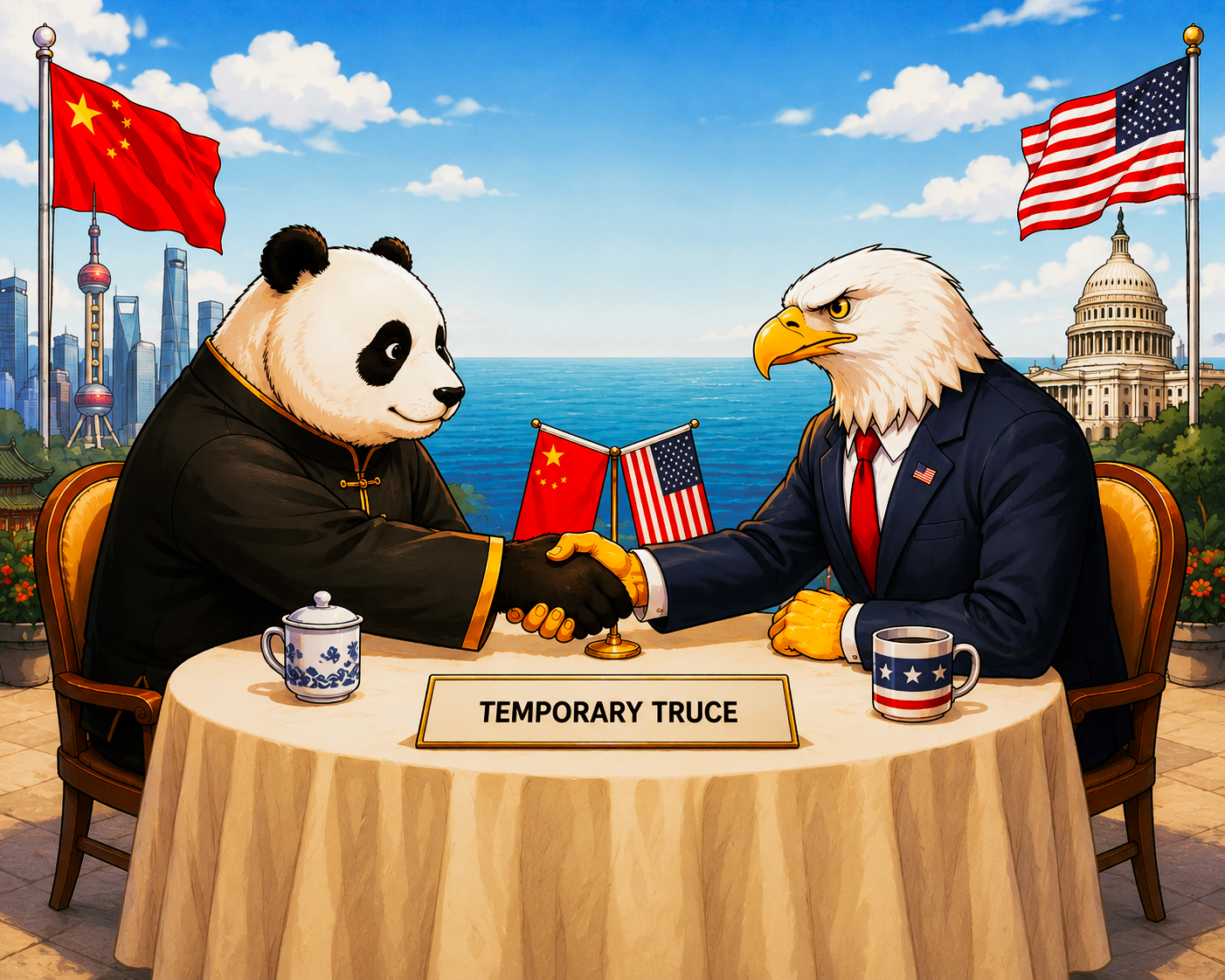
- Transatlantic split: The U.S. demands decoupling, while the EU seeks de-risking, straining alliances and exposing Europe to retaliation risks.
- EU’s balancing act: Policies like FDI screening and the Chips Act aim for autonomy, but progress is slow due to costs and political fragmentation.
- Need for action: The EU must diversify supply chains, boost defense cooperation, and assert strategic independence to avoid being caught between U.S. and Chinese pressures.
Introduction
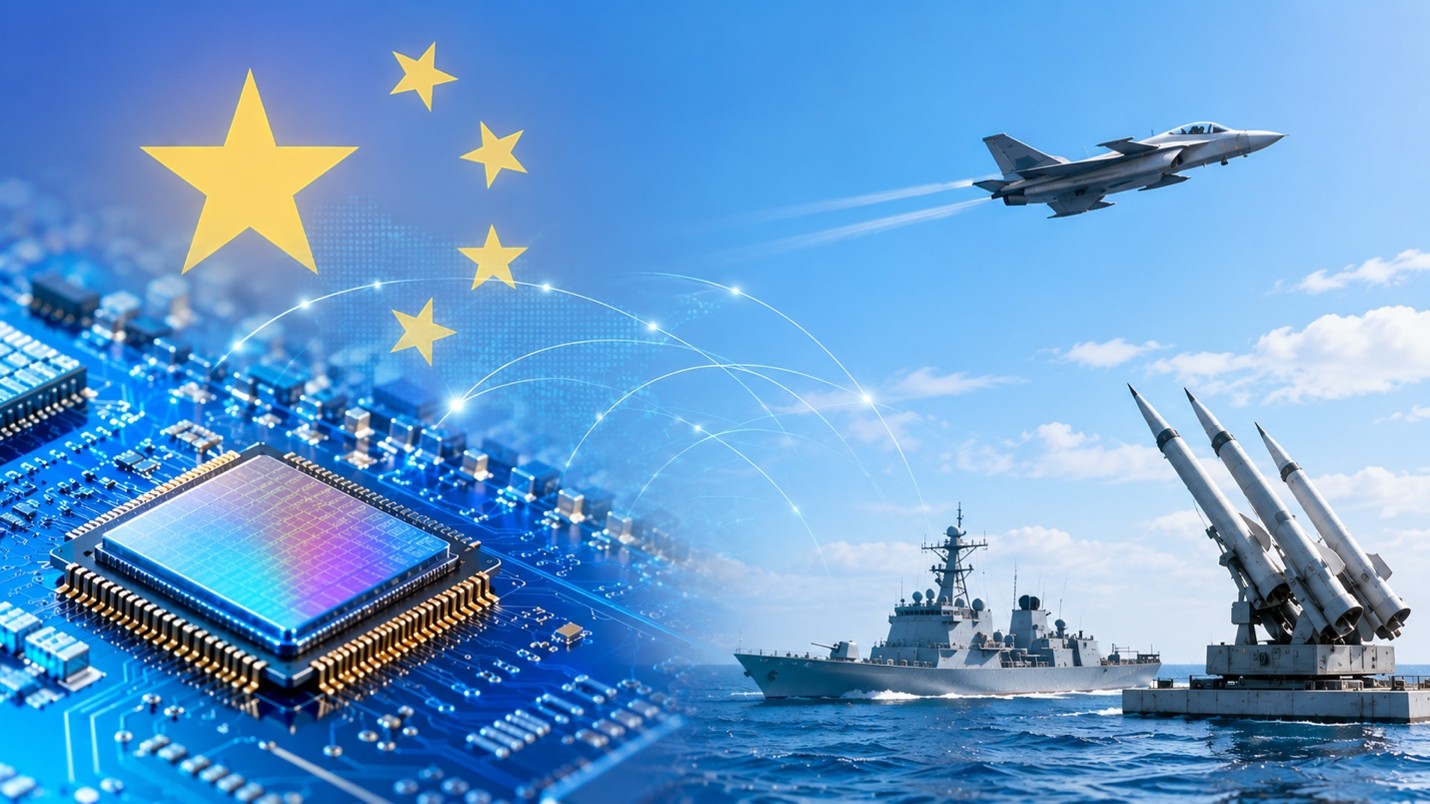
China is rapidly transforming the PLA into a technologically advanced, multidomain force capable of operations spanning from the electromagnetic spectrum to outer space. With estimated defense spending exceeding $313 billion annually in 2024—though actual figures may be significantly higher—Beijing has prioritized investments in cyber warfare capabilities, counter-space systems, hypersonic weapons, and long-range precision strike missiles.[1] The PLA Navy has become the world's largest naval force by hull count with 841 vessels in January 2026[2], with growing blue-water capabilities that enable sustained operations in distant waters, including occasional presence in European maritime approaches and the Mediterranean.
The integration of civilian and military sectors under the Chinese Military-Civil Fusion (MCF) strategy represents perhaps the most significant challenge for European policymakers.[3] This comprehensive national strategy is elevated to the highest levels of Chinese state policy under Xi Jinping and mandates the systematic transfer of commercial technologies, research capabilities, and industrial capacity to support PLA modernization objectives.[4] The strategy explicitly targets dual-use technologies in artificial intelligence, quantum computing, biotechnology, advanced materials, and semiconductor manufacturing—precisely the sectors where European companies maintain some competitive advantages.[5]
MCF fundamentally breaks the traditional Western assumption that civilian and military technology sectors can be meaningfully separated. European dual-use export controls, investment screening mechanisms, and technology partnerships all relied on this distinction - which MCF explicitly dissolves. This fusion fundamentally blurs the line between commercial and strategic activities, raising acute concerns about Chinese investments in European critical infrastructure, technology partnerships with European universities, and the presence of Chinese companies in sensitive supply chains. Entities such as Huawei, ZTE, and CRRC—all subject to varying degrees of MCF obligations—have established substantial operations across Europe, creating dependencies that extend beyond simple commercial relationships. Europe is increasingly dependent on China for its Green transition, research and innovation, economic development as well as a partner to balance the U.S. influence. This creates as asymmetric vulnerabilities: European firms engage with what they believe are civilian Chinese partners, inadvertently contributing to PLA capabilities. The challenge for European policymakers lies in distinguishing legitimate commercial activity from strategic positioning that could support PLA objectives, whether through technology acquisition, intelligence gathering, or future leverage in crisis scenarios.
PLA leverages MCF to become a "world-class military" by 2049 through three phases: mechanization, informatization, and intelligentization.[6] MCF channels civilian innovation—especially AI, quantum computing, and autonomous systems—into military capabilities while acquiring foreign technology through investments, partnerships, and espionage to achieve information dominance in future warfare
Supply Chain Vulnerabilities and Strategic Dependencies
European industries face profound vulnerabilities stemming from concentrated dependencies on Chinese-origin materials and components. The defense sector, aerospace manufacturing, renewable energy production, and digital technologies all rely heavily on Chinese supplies of rare earth elements, gallium, germanium, tungsten, and increasingly sophisticated electronic components.[7] China controls approximately 69% of global rare earth mining and over 90% of processing capacity[8], creating a structural dependency that cannot be resolved in the short or medium term. This is not unique to Europe in any way, but the size of the European economy and its green transition demand much larger volumes and exacerbate the impact of the dependency.
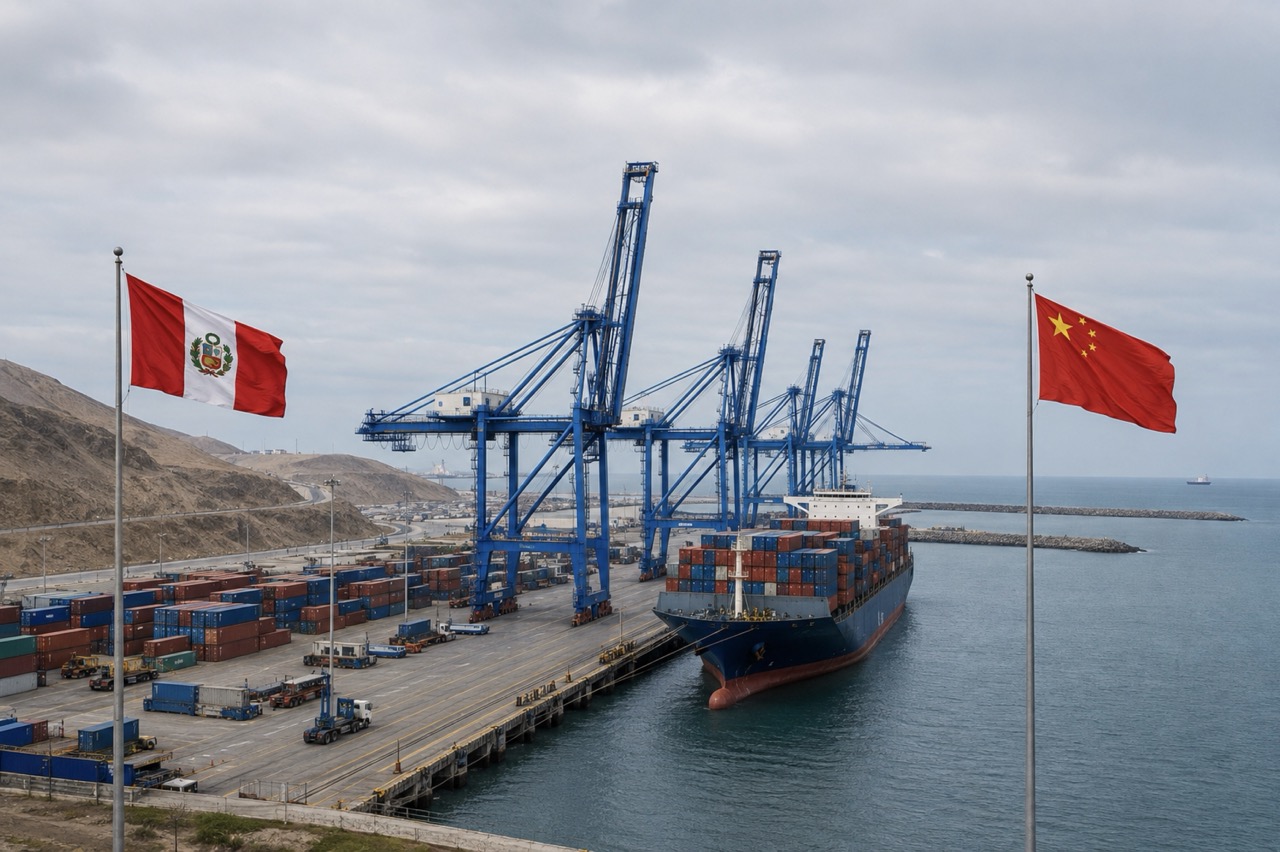
These dependencies expose the EU to strategic coercion, as demonstrated by China's 2023 export restrictions on gallium and germanium—critical materials for semiconductor manufacturing and military applications[9]—implemented in direct response to Western technology controls. The implications extend beyond materials to encompass entire value chains. European defense contractors source components from suppliers with opaque ownership structures and supply chains that may ultimately trace back to PLA-linked entities. The BRI has facilitated Chinese investments in European ports, including Piraeus, Hamburg, and Valencia, telecommunications infrastructure across Central and Eastern Europe, and energy networks that create potential access points for intelligence collection or future disruption.
The COVID-19 pandemic exposed the fragility of just-in-time global supply chains and Europe's particular vulnerability to single-source dependencies. Yet progress toward diversification has been slower than rhetoric suggests. European companies face significant cost disadvantages when sourcing alternatives, and the scale of investment required to establish truly diversified supply chains—particularly for rare earth processing and advanced manufacturing—exceeds current political commitments, especially in the light of the tension with the U.S. The PLA benefits indirectly from these dependencies, as economic leverage translates into constraints on European policy autonomy, particularly regarding Taiwan, the South China Sea, and human rights concerns in Xinjiang.
The Transatlantic Dilemma: Navigating Between Washington and Beijing
The emergence of a more aggressive U.S. posture toward China under successive administrations has created acute challenges for European strategic planning. Washington has moved from engagement to comprehensive strategic competition, implementing expansive export controls, investment screening mechanisms, and diplomatic pressure for allied conformity to American approaches. The CHIPS Act, Inflation Reduction Act, and export control measures on advanced semiconductors represent unilateral American actions that affect European interests while demanding European compliance.[10] The compliance is not only in terms of economics but also threats of territorial aggression in Greenland and unfair peace treaties in Ukraine.
This aggressive U.S. stance places the EU in an extraordinarily difficult position. Unlike the United States, which can leverage continental scale, technological leadership, and relative economic self-sufficiency, Europe remains deeply integrated into global trade networks where China plays an indispensable role. Chinese markets absorbed €223 billion in European exports in 2023, making China the EU's third-largest export destination and largest source of imports with 20.5 percent of total imports.[11] German automotive manufacturers, French luxury brands, and specialized machinery producers across Europe depend on Chinese demand for their commercial viability. The integration runs deeper than trade statistics suggest—German companies have invested € 7.3 bn in the first half of 2024, compared with €6.5 bn for 2023 as a whole, in Chinese operations, creating a strong partnership and generating returns that fund European innovation and social systems.[12] The trend is that the German investments will increase by at least 50 percent in 2025 as well, according to Chinese figures, with a focus on automotive, new energy vehicles, chemicals, and advanced materials.[13]
The challenge intensifies when considering specific policy domains. On technology controls, Washington demands European participation in restricting exports of advanced semiconductors, manufacturing equipment, and dual-use technologies to China, while simultaneously pushing for U.S. control. These controls directly impact European companies like ASML, whose extreme ultraviolet lithography systems are essential for advanced chip production, or German precision equipment manufacturers whose technologies enable Chinese industrial upgrading.[14] Compliance with American demands risks Chinese retaliation, loss of market access, and the emergence of Chinese competitors freed from dependency on Western technology suppliers. Yet non-compliance risks American secondary sanctions, technology transfer restrictions, and exclusion from American markets and defense partnerships.
The divergence extends to fundamental strategic assessments. While Washington increasingly views China as a comprehensive adversary requiring confrontation across all domains, Brussels has articulated a more nuanced "de-risking" approach that acknowledges China simultaneously as a partner, competitor, and systemic rival depending on the domain.[15] This formulation reflects European interests in maintaining economic engagement while building resilience against coercion—a stance that Washington increasingly views as naive or as free-riding on American security guarantees. The risk is that transatlantic divisions over China policy become as significant a challenge to European security as Chinese actions themselves, potentially providing Beijing with opportunities to exploit allied disunity.
The PLA factor complicates this further. As American rhetoric frames China in increasingly military terms—emphasizing PLA modernization, Taiwan contingencies, and the potential for great power conflict—European publics and policymakers struggle to perceive direct military threats from Beijing. The PLA does not patrol European borders (not even Greenland), threaten European territory, or engage in the kind of immediate military coercion that Russia demonstrates, and the U.S. has threatened regarding Greenland.[16] This perception gap creates space for European reluctance to align with American positions that seem disproportionate to threat perceptions while potentially sacrificing significant economic interests. Yet this perception may underestimate how PLA capabilities could affect European interests in a Taiwan crisis or broader Sino-American conflict through cyber operations, disruption of global supply chains, or leverage over European dependencies. Not that the dependency on the U.S. is necessarily much better at this political juncture.
EU Strategic Response: Balancing Autonomy and Alliance
The European Union has developed an increasingly sophisticated policy framework addressing Chinese strategic challenges, though implementation remains uneven across member states. The Strategic Compass for Security and Defence represents the EU's most comprehensive effort to enhance coordination on threat assessments, crisis response capabilities, and military mobility.[17] This framework explicitly identifies China as a security concern while maintaining that engagement must continue on issues like climate change and pandemic response.
Regulation (EU) 2019/452 on screening foreign direct investment has enabled member states to examine investments that may affect security or public order, with particular attention to critical infrastructure, sensitive technologies, and media plurality.[18] However, the regulation's effectiveness varies dramatically across the union. While France, Germany, and Italy maintain robust screening mechanisms, other member states lack the analytical capacity or political will to identify and address problematic investments. The regulation also came too late to address many existing Chinese holdings in European ports, energy networks, and telecommunications infrastructure.
On cybersecurity and critical infrastructure protection, the NIS2 Directive and Critical Entities Resilience (CER) Directive strengthen defenses against hybrid threats, including those potentially linked to PLA cyber operations.[19] These measures mandate security standards, incident reporting, and risk management for entities providing essential services. Yet implementation faces challenges from limited cybersecurity expertise, insufficient investment in defensive capabilities, and the reality that many existing systems incorporate Chinese components that cannot be quickly replaced. The PLA's Strategic Support Force, responsible for cyber, space, and electronic warfare operations, has demonstrated sophisticated capabilities for penetrating Western networks, conducting intellectual property theft, and positioning for potential wartime disruption—threats that exceed current European defensive capabilities.
The EU's "de-risking" strategy represents an attempt to chart a middle course between American decoupling and continued vulnerability. This approach emphasizes diversifying supply chains, also away from an increasingly erratic U.S., coordinating export controls on the most sensitive technologies, and investing in domestic production of strategic materials through initiatives like the Critical Raw Materials Act and European Chips Act.[20] Yet the scale of investment required, potentially trillions of euros over decades, far exceeds current commitments. Moreover, de-risking requires sustained political consensus across member states with divergent interests and China exposures, a consensus that may fragment under Chinese pressure or American demands for more aggressive measures.
Strategic Recommendations: Charting an Independent Course
To effectively respond to the PLA's indirect influence while managing the complexities of divergent transatlantic approaches to China and U.S. threats to European security, the EU should pursue the following 6 priorities:
- Strengthen intelligence sharing and threat assessment. The EU should develop an independent analytical capacity to assess PLA-linked entities, technology transfer risks, and supply chain vulnerabilities. This is especially considering the geopolitical challenges with the U.S. This would require significant investment in human intelligence capabilities, technical analysis, and coordination mechanisms that today exist only fragmentarily across member states. The EU Intelligence and Situation Centre (EU INTCEN) should be given enhanced resources and mandates to produce comprehensive assessments of Chinese strategic activities in Europe.
- Accelerate industrial rearmament and critical capacity building. There is a need for more focus on initiatives like the Security Action for Europe (SAFE) and ReArm Europe.[21] Concrete investment, streamlined procurement, and elimination of regulatory barriers that impede European defense industrial cooperation should be prioritized. Beyond military systems, the EU must invest in building indigenous capacity for rare earth processing, advanced semiconductor manufacturing, and other strategic sectors where Chinese dominance creates vulnerability.
- Shape a more autonomous transatlantic dialogue on China. Rather than simply responding to American demands or Chinese pressure, the EU should proactively engage Washington and other allies in a structured dialogue that allows for divergent interests while identifying areas for genuine cooperation rather than unilateral demands. European economic interests in Chinese markets are legitimate considerations that deserve American recognition, while European security dependencies on the United States create reciprocal obligations. The goal should be coordinated approaches that reflect both American and European interests rather than unilateral American decisions imposed on reluctant European allies.
- Deepen partnerships with like-minded democracies beyond the traditional West. The EU should deepen cooperation with Japan, South Korea, Australia, and emerging partners in Southeast Asia and Latin America to build resilient supply chains, coordinate on technology protection standards, and offer alternatives to exclusive reliance on either Chinese or American systems. These partnerships can provide both economic diversification and diplomatic weight in managing great power competition.
- Maintain direct diplomatic engagement with Beijing. Even as the EU builds resilience against coercion, it must maintain high-level dialogue with the Chinese leadership on shared interests, including climate change, pandemic response, and economic stability. This engagement should be clear-eyed about divergences while preventing the complete breakdown of communication that could lead to miscalculation. The EU should articulate red lines regarding Taiwan and other security concerns while emphasizing that European policy will be determined in Brussels, not Washington or Beijing.
- Expand military diplomacy and presence in the Indo-Pacific. As the PLA extends its global reach, the EU must expand its own presence and partnerships in regions where European interests are at stake. This includes enhanced naval presence, security assistance programs, and diplomatic engagement that demonstrates European commitment to international law and the peaceful resolution of disputes. The goal is not to match PLA capabilities but to demonstrate that Europe cannot be ignored in shaping regional security architecture.
Conclusion
The PLA's modernization and global strategy pose a complex, multifaceted challenge to the European Union's security and economic resilience at a moment when transatlantic unity faces unprecedented strain. While the threat is not overtly military in nature, its indirect effects—through technology acquisition, investment positioning, supply chain leverage, and cyber operations—require coordinated and sustained European responses. The complication arising from increasingly aggressive U.S. approaches to China creates a strategic dilemma: the EU must build resilience against Chinese coercion while maintaining economic engagement essential to European prosperity, all while managing American demands for conformity that may not align with European interests.
The path forward requires the EU to assert genuine strategic autonomy—not as rhetoric but as concrete policy independence based on robust capabilities and clear-eyed assessments of European interests. This means building the analytical, industrial, and military capabilities to defend European interests independently while maintaining productive relationships with both Washington and Beijing, where interests align. The alternative—passive response to great power competition—risks leaving Europe as an object rather than a subject of twenty-first century geopolitics, vulnerable to coercion from multiple directions and unable to defend the open, rules-based international system upon which European security and prosperity ultimately depend.

 | Funded by the European Union. Views and opinions expressed are however those of the author(s) only and do not necessarily reflect those of the European Union or European Research Executive Agency (REA). Neither the European Union nor the granting authority can be held responsible for them. |
[1] Military expenditure (current USD), World Bank Group, accessed January 7, 2026, Military expenditure (current USD) | Data
[2] Global Fire Power, Naval Fleet Strength by Country ((2026), Accessed January 27, 2026, Navy Fleet Strength by Country (2026)
[3] Elsa Kania & Lorand Laskai, Myths and Realities of China’s Military-Civil Fusion Strategy, CNAS, January 28, 2021, Myths and Realities of China’s Military-Civil Fusion Strategy | CNAS; Fatoumata Diallo, China’s military-Civil Fusion in Space: Strategic Transformations and Implications for Europe, Eurohub4Sino, June 2025, files_chinas-military-civil-fusion-in-space-strategic-transformations-and-implications-for-europe.pdf
[4] Samantha Hoffman and Nathan Attrill, Mapping China’s Tech Giants: Supply chain & the global data collection ecosystem, June 8, 2021, Mapping China's Tech Giants: Supply chains & the global data collection ecosystem - ASPI; Emily Weinstein, Don’t underestimate China’s Military-Civil Fusion Efforts, Foreign Policy, February 5, 2021, China's Military-Civil Fusion Is Incomplete but Dangerous
[5] Fredrik Erixon, Andrea Dugo, Dyuti Pandya and Elena Sisto, Mapping the Quantum Ecosystems: How Are Economies Positioning Themselves for Innovation Success, September 2025, European Centre for International Political Economy, Mapping the Quantum Ecosystems: How Are Economies Positioning Themselves for Innovation Success |
[6] Zhao Lei, PLA to be world-class force by 20250, China Daily, October 27, 2017; PLA to be world-class force by 2050 - China - Chinadaily.com.cn
[7] European Commission, "Study on the Critical Raw Materials for the EU 2023," Final Report, March 16, 2023, Study on the Critical Raw Materials for the EU 2023 - Final Report - Internal Market, Industry, Entrepreneurship and SMEs; Michael Allen, Securing rare earths for Europe’s high-tech industries, Horizon, January 3, 2024, Securing rare earths for Europe’s high-tech industries | Horizon Magazine
[8] Rendse Huld, Rare Earth Elements: Understanding China’s Dominance in Global Supply Chains, China Briefing, August 29, 2025, China’s Rare Earth Elements: What Businesses Need to Know; Tae-Yoon Kim, Shobhan Dhir, Amrita Dasgupta & Alessio Scanziani, With new export controls on critical minerals, supply concentration risks become reality, International Energy agency, October 23, 2025, With new export controls on critical minerals, supply concentration risks become reality – Analysis - IEA
[9] International Energy Agency, Announcement of the Implementation of Export control of Items Related to Gallium and Germanium, April 25, 2025, Announcement on the Implementation of Export Control of Items Related to Gallium and Germanium – Policies - IEA
[10] Matthias Bauer & Dyuti Pandya, Time to Rethink Export Controls for Strengthening US-EU Cooperation and Global Trade Rules, European Centre for International Political Economy, Policy Brief No. 7, 2024, ECI_24_PolicyBrief_07-2024_LY03.pdf
[11] Statista, Total value of annual good exports from the European Union to China from 2002 to 2023, November 2024, EU exports to China 2023| Statista; Peter Kramer, EU-China trade slips with 27%, European Business Review, March 6, 2024, EU-China trade slips with 27%! - EU Actually - EBR
[12] Guy Chazan, German investment in China soars despite Berlin’s diversification drive, Financial times, August 13, 2024, German investment in China soars despite Berlin’s diversification drive
[13] Xinhua, German companies ramp up investments in China, March 11, 2025, Xinhua Headlines: German companies ramp up investment in China-Xinhua; Eurostat, China-EU-international trade in goods statistics, February 2025, China-EU - international trade in goods statistics - Statistics Explained - Eurostat
[14] Sanne Van Der Kugt, Why ASML is the EU’s most Important Bargaining Chip, Bocconi University, May 22, 2024, Why ASML is the EU’s most Important Bargaining Chip | IEP@BU; Erik Van Klinken, How close is China’s EUV project to eliminating ASML’s monopoly, TEchzine, December 18, 2025, How close is China's EUV project to eliminating ASML's monopoly? - Techzine Global
[15] European Commission and High Representative of the Union for Foreign Affairs and Security Policy, "European Economic Security Strategy," Joint Communication, June 2023, EUR-Lex - 52023JC0020 - EN - EUR-Lex.
[16] Reuters, Nordics reject Trump’s Claim of Chinese and Russian ships around Greenland, January 11, 2026, Nordics reject Trump's claim of Chinese and Russian ships around Greenland, FT reports | Reuters
[17] European Union External Action Service, "A Strategic Compass for Security and Defence," March 2024, A Strategic Compass for Security and Defence | EEAS.
[18] European Union, Regulation (EU) 2019/452 of the European Parliament and of the Council of 19 March 2019 establishing a framework for the screening of foreign direct investments into the Union, Euro-Lex, December 23, 2021, Regulation - 2019/452 - EN - EUR-Lex
[19] European Commission, CER and NIS-2 Directives enter into force to strengthen EU’s Resilience, November 26, 2022, CIPR - CER and NIS-2 Directives enter into force to strengthen EU's Resilience
[20] European Commission, European Critical Raw Materials act, accessed January 28, 2026 European Critical Raw Materials Act - European Commission; European Commission, European Chipsa act, accessed January 28, 2026, European Chips Act | Shaping Europe’s digital future
[21] European Commission, SAFE-Security Action for Europe, accessed January 28, 2026, SAFE | Security Action for Europe - European Commission; Sebastian Clapp, Martin Höflmayer, Elena Lazarou & Marianna Pari, ReArm Europe/Readiness 2030, European Parliament Research Service, April 2025, ReArm Europe Plan/Readiness 2030