Key Takeaways
- Europe is looking at China’s biotech rise through the wrong lens. By focusing on pharmaceuticals and metrics such as trial volumes, patents, and capital, it risks reducing China to a benchmark rather than a system to be understood.
- Much of China’s biomedical surge has been driven by intense “involution”: hypercompetition that produces speed and volume alongside duplication, price pressure, and uneven innovation.
- China’s ambition extends well beyond pharmaceuticals. Beijing is positioning biomanufacturing as a manufacturing paradigm tied to industrial upgrading and technological self-reliance.
- Geopolitical decoupling is pushing multinationals toward separate Chinese and Western supply chains, investments, and research. Yet the dichotomy between “European” and “Chinese” biotech is misleading, as many multinationals remain deeply embedded in China’s ecosystem.
- The EU’s advantage may lie less in matching China’s speed than in shaping the rules of biotechnology, drawing on its strengths in ethics, transparency, regulation, and accountability.
Introduction
Biotechnology is rapidly emerging as the next arena of geopolitical competition. After electric vehicles and artificial intelligence, China’s rise in biotechnology is viewed in Washington and Brussels not only as an economic challenge but as a strategic one. According to an estimation from Harvard Belfer Center in 2025, among five critical technology sectors, “China has the most immediate opportunity to overtake the United States in biotechnology.”[1] In the United States, the issue has been framed as a national security concern. The BIOSECURE Act, folded into the 2026 defense authorization, is presented by its proponents as “an important first step to protect the industry and our critical supply chains from interference by our nation’s adversaries.”[2]
While biotechnology spans a diverse spectrum of branches covering pharmaceuticals (red), industry (white), and agriculture (green) [3], international scrutiny of Chinese competitiveness centres primarily on the medical domain. Like the US, Europe has recognised the same trend but drawn a different conclusion. As one commentary put it, “faced with rising competition from China, the European Union has adopted a defensive posture, in contrast to the more offensive stance taken by the United States”.[4] In late 2025, the European Commission proposed Biotech Act I. With a primary focus on health sector, it frames the challenge largely as an internal one and seeks to amend several existing EU legal instruments. In the Commission’s account, the central problem is European regulatory friction: slow approvals, fragmented clinical-trial authorisation, limited venture capital, and difficulty to scale.[5] China appears in this narrative less as an adversary than as a mirror and a model—a demonstration of what becomes possible when the state clears a path for biotechnology. The supporting evidence is by now ritually citied: China’s share of industry-sponsored clinical trials rose from roughly 5 percent in 2013 to 18 percent a decade later[6]; patent filings, R&D spending, and the share of novel drug candidates originating from Chinese firms have all expanded sharply.[7]
That story is not wrong about the direction of change. But the European reading of China’s biotechnology rise remains incomplete because it is filtered through the indicators Europe itself values: clinical-trial volumes, publication output, patent filings, regulatory approval times, and venture-capital flows. This narrow, quantitative lens reflects not only Europe’s policy priorities but also the influence of its existing industrial structure. China is therefore often reduced to a benchmark against which Europe’s competitiveness is measured, rather than examined as a complex and evolving political-economic system in its own right.
More importantly, the dominant narrative flattens a genuinely intertwined global system into a binary of us versus them. The reality is a dense web of different incentives and interest from different players across the globe: Western capital finances Chinese biotech firms; International pharmaceutical giants license Chinese molecules to offset their own patent cliffs; and Chinese firms rely on Western regulatory validation to unlock the value of their assets. To read this system as a simple contest between “European” and “Chinese” biotechnology is to misunderstand the object of analysis before the analysis has begun.
This article therefore pursues five analytical lines of inquiry: first, to examine dynamics within Chinese biomedicine that are largely absent from Europe’s narrative; second, to reconstruct China’s expansive conception of biotechnology; third, to analyse China’s own reading of the biotechnology value chain and the links it sees as in need of breakthrough; fourth, to assess both the risks generated by China’s rise in biotechnology and those arising as intensifying geopolitical tensions reshape a highly globalised industry; and fifth, to draw out policy recommendations for the European Union.
Involution, Not Innovation, as the Driver of China’s Biotech Growth
China’s vision for biotechnology extends well beyond the health sector, as the next section demonstrates. The present section examines the pharmaceutical segment because it has been the principal focus of European assessments of China’s innovation capabilities.
In industry parlance, “biotech” usually denotes small and mid-sized firms engaged in discovery and early-stage clinical work, while “Big Pharma” refers to the multinationals that acquire such discoveries and possess the regulatory, clinical-trial, and manufacturing capabilities needed to commercialise them.[8] European attention has focused above all on the recent expansion of Chinese biotech: according to Goldman Sachs, 46 percent of new drug molecules entering human trials in the first half of 2025 originated with Chinese companies, and multinationals now source close to a third of their externally acquired candidates from China.[9]
But multinationals are not buying on impulse. The main driver of Big Pharma’s appetite for external drug candidates is the patent cliff: the sharp revenue decline that follows when a protected drug loses exclusivity. Because a small number of products account for most large manufacturers’ drug revenues, the expiry of just two or three blockbuster patents can create a gap that internal pipelines cannot fill in time.[10] Chinese assets are among the cheapest ways to bridge that gap. According to PhRMA, early-stage studies in China run roughly half as fast and 40 percent cheaper than in the United States.[11] Western analysts attribute this to China’s “competitive advantage”: a much larger patient pool, which makes recruitment faster and cheaper, as well as lower costs for research labour and computation.[12]
What this account misses is the explanation offered by Chinese industry insiders, and increasingly Chinese regulators, for why this pipeline is simultaneously broad, fast, and shallow. Their answer is involution (内卷, neijuan): hypercompetition in which too many firms crowd into the same opportunities, drive one another to the margin on price, and generate volume without corresponding value.[13] Involution is a phenomenon bearing down on almost every Chinese industry, from photovoltaics and electric vehicles, where intense competition has driven the same race to the bottom.[14] Pharmaceutical development, however, is particularly ill-suited to such conditions. Bringing a novel therapy to market typically takes around a decade and costs US$1 billion[15], with a high probability of failure—a risk profile fundamentally at odds with compressed timelines and eroding margins.
It is therefore unsurprising that Chinese firms often concentrate on validated targets and established modalities rather than on genuinely first-in-class innovation. PD-1 inhibitors are the clearest example. After Bristol Myers Squibb and Merck each brought a breakthrough PD-1 cancer therapy to market in 2014, more than half of the world’s PD-1 programmes were being developed by Chinese firms within a few years, and most simply repeated studies already conducted on the two American drugs.[16] Chinese industry commentators themselves describe the class as a textbook case of irrational involution: herd behaviour around a fashionable target, homogeneous competition, price-cutting, and declining innovative value.[17]
A newer hotspot is antibody-drug conjugates (ADCs)—complex cancer drugs that combine an antibody with a toxic payload to target tumour cells more precisely. After Daiichi Sankyo and AstraZeneca’s Enhertu was approved in 2019, Chinese biotechs moved quickly: by 2025, they had launched more than 500 ADC programmes, accounting for roughly 40 percent of the global pipeline.[18] As industry participants acknowledged in a 2023 discussion, ADCs offered an “excellent opportunity for me-too, fast-follow and best-in-class development.” Technically, ADC manufacturing is highly complex, and where high labour costs deter developed countries, Chinese teams proved "willing to put in the painstaking work".[19] But the field quickly converged on the same few fashionable targets, producing a worrying bubble. In some cases, Western partners have returned assets, and doubts have grown about the reliability of Chinese clinical data. “China’s ADC bubble is bursting,” warned a 2025 commentary carried by PhIRDA, the sector’s own innovation association.[20]
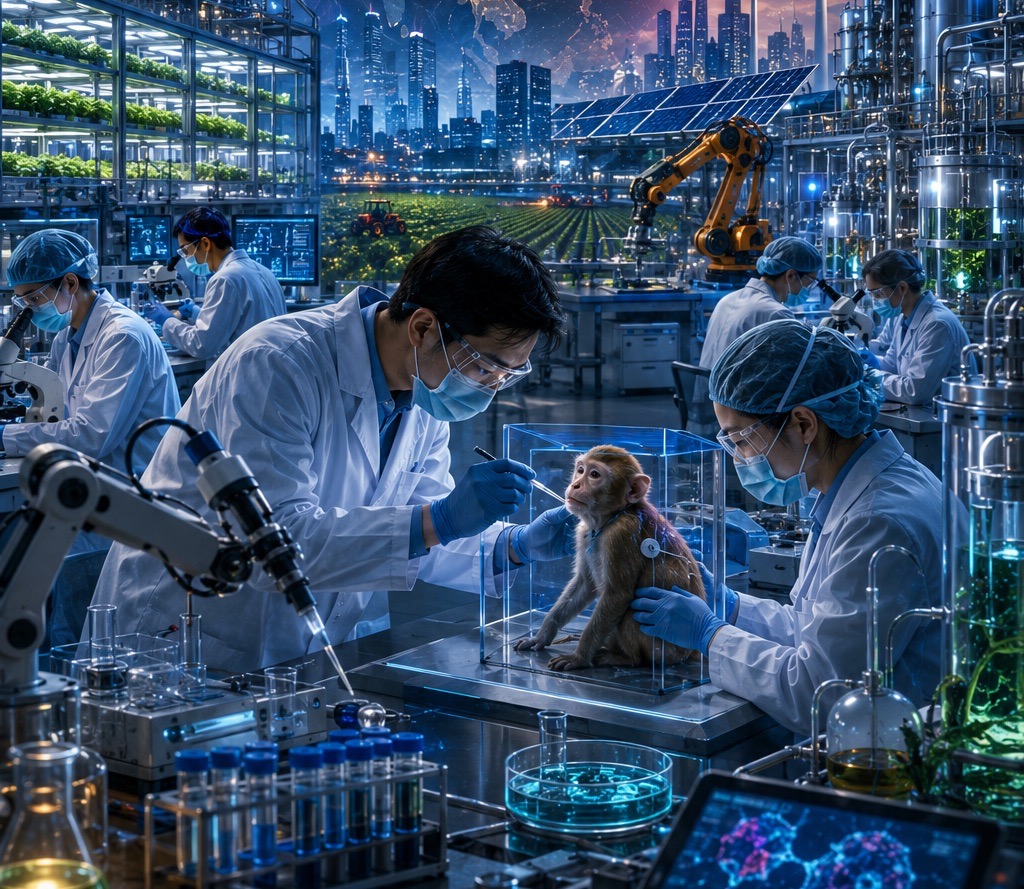
Not even monkeys are spared by irrational involution. In July 2026, the price of laboratory monkeys in China reached a record high of more than €20,000, roughly double the level a year earlier, and companies competed to hoard them.[21] The boom reflects rising biotech activity, but Chinese analysts read it as another sign of irrational competition: too many firms pursuing too many similar projects.[22] The ethical cost is rarely counted, though duplicative pipelines also consume the lives of laboratory primates.
Tackling involution is now the government’s own stated position. In 2025, a senior official acknowledged that many domestic drug developments are heavily follow-on products and often lack obvious clinical value, and a 16-measure package was explicitly framed around avoiding “involutionary competition”.[23] Yet Chinese analysts argue that involution is also a product of regulatory acquiescence: reforms since 2015 sharply improved review efficiency without creating meaningful entry thresholds or robust clinical-value screening for incremental innovation, allowing me-too filings to flood the system.[24]
The same pressure affects research quality. Chinese media have reported what they call “chaos in clinical trials” (临床试验乱象) [25], including corruption and data falsification. The distortion extends into the academic literature, where many biomedical research areas involve numerous experimental steps and large datasets, making them "high-risk zones" for fabrication.[26] In 2026, a former doctoral student in biology used social media to expose a series of academic fraud cases, triggering a national sensation. He implicated deans and senior scholars at several leading universities in data fabrication across Nature-family journals, prompting swift investigations and dismissals.[27] The debate that followed went beyond individual misconduct to the deeper incentives of an academic reward system that prizes quantity over quality.
This is not, however, the only reading available in the Chinese debate about involution. Senior figures, including former regulators, argue that what now looks like wasteful overcompetition also served a developmental function: in a phase of “wild growth” (野蛮生长)[28], crowded competition helped a young industry build and validate the platforms that now support its licensing success.[29] The two readings are not mutually exclusive. Involution may have been both wasteful and formative. What is striking is that neither reading is visible in European policy discourse on China’s biotech boom.
None of this diminishes China’s biomedical surge or its contribution to human health. It does, however, show that equating volume with quality is analytically unsound. Europe’s declining share of clinical trials and research spending reflects a global cost-and-scale arbitrage at least as much as any deficiency in regulatory speed, which is why shaving days from the Clinical Trials Regulation clock is unlikely to change the picture unless Europe is willing to replicate China’s own era of wild growth.
“Biomanufacturing makes everything” – China’s own vision on biotechnology
As analyst already stated, there are different terms surrounding biotechnology that can be confusing.[30] For the EU’s agenda, the Biotech Act I with biopharma has been viewed as the centrepiece of its broad strategy[31], with a deferred Biotech Act II (due in late 2026) to extend the framework to industrial biotechnology and biomanufacturing.[32]
China’s vision of biotechnology is broader still. It is organised around the very category the EU has deferred: biomanufacturing (生物制造), understood not as a sector but as a manufacturing paradigm. The slogan that recurs across Chinese industry conferences captures the ambition better than any technical definition: 生物制造,制造万物 — “biomanufacturing makes everything”.[33]
“No less important than semiconductors”
From the 1980s onward, as biotechnology moved from the laboratory into industry, post-reform China sought to catch up with the world's technological leaders. In March 1986, the Central Committee approved the National High-Technology Research and Development Plan (the 863 Programme), identifying biotechnology as one of seven priority high-technology fields.[34]
Where early policy treated biotechnology primarily as a scientific domain recent strategies have increasingly framed biotechnology, the bioeconomy, and biomanufacturing as an integrated industrial agenda. The 13th Five-Year National Science and Technology Innovation Plan (2016), for example, positioned biotechnology innovation as a driver of life sciences, biomanufacturing, and bioenergy, with the explicit goal of strengthening the bioeconomy's international competitiveness.[35]
By the 14th Five-Year Bioeconomy Development Plan (2022), biomanufacturing had been elevated to a strategic emerging industry, tasked with embedding biotechnology across chemicals, pharmaceuticals, materials, and light industry.[36]
The recommendations for the 15th Five-Year Plan (2025) gave biomanufacturing unprecedented prominence. In People's Daily ‘s reading, it occupies a "dual position in top-level design." Under the goal of "accelerating high-level science-and-technology self-reliance," it is identified as one of six core technologies to be advanced "with extraordinary measures" across the entire value chain. Under the goal of "building a modern industrial system," it is designated a future industry to be developed in advance as a new engine of growth.[37]
The enthusiasm this has generated within the industry is easy to imagine. Advocates contend that biomanufacturing is, strategically, "no less important than semiconductors," and they advance four principal claims.
First, they cast it as the foundation of China's manufacturing upgrade, capable of transforming virtually every industrial sector. Second, they present it as the lowest-carbon pathway, one that could offset China's structural resource constraints, above all its dependence on imported oil and its shortage of arable land. Third, they see it becoming the single largest emerging industry, citing estimates that the United States alone is planning a biomanufacturing sector worth some USD 30 trillion—in effect, "building a second American economy." Finally, and perhaps most tellingly, they argue that it can absorb capital on an enormous scale, offering the largest new investment outlet in the wake of the property market's collapse.[38]
The (Dis)advantages of Vagueness
Local governments have been eager to demonstrate their enthusiasm as well, each issuing its own biomanufacturing development plan. Yet China's vague definition of the field sometimes produces unintentionally comic results. Traditional Chinese medicine (TCM), for example, is routinely folded into the biopharmaceutical portfolio. By any conventional definition, however, herbal decoctions are not biomedicine, which relies on modern engineering to modify organisms or their components. But when categories are elastic and political incentives favour large numbers, the categories tend to expand.
In 2024, the Tianjin Institute of Industrial Biotechnology at the Chinese Academy of Sciences (CAS) —the country's leading institute in the field—published its White Paper on China's Industrial Biotechnology Development.[39] In estimating China’s biomanufacturing size, it folded large parts of TCM and chemical pharmaceuticals, with the result that medicine and health appeared to account for roughly three-quarters of the entire field. The figures were subsequently reproduced in overseas research.[40] The 2025 edition of the White Paper corrected the problem by adopting what it described as a "narrow statistical definition", reducing the output value of the medicine-and-health segment by more than half. Under the revised taxonomy, the segment accounts for about RMB 4.55 trillion of a biomanufacturing industry worth roughly RMB 10 trillion[41].
And yet China's broad-brush approach also carries strategic advantage: Loose definitions dissolve inherited sectoral boundaries and leave room for industries that do not yet exist. The EU's biotechnology agenda, by contrast, reads like the handwriting of incumbent industries. Act I bears the fingerprints of pharmaceuticals; Act II is organised around an inventory of established markets: chemicals, plastics, fibres, construction materials, and fertilisers. It maps an industrial structure that already exists and already has representation in Brussels. China's conceptual vagueness is a genuine analytical weakness where precise measurement is required, and a genuine strategic strength where it comes to creating space for what has not yet emerged.
Reading the chain, not the sectors
Perhaps the clearest lens onto how China conceives of biomanufacturing is the work of Tan Tianwei (谭天伟), a leading biotechnologist at the Chinese Academy of Sciences. Rather than dividing the field into industrial sectors, Tan and his colleagues conceptualize it as an integrated value chain.[42] In their framework as illustrated in figure1, an upstream "methods" layer—laboratory experiment, computation, and artificial intelligence—supports the core stages of the chain: raw-material supply; a production platform built on microbial strains and enzymes; equipment and process engineering; product management; and waste treatment. Only at the downstream end does the chain fan out into application sectors: energy, chemicals, materials, food, agriculture, pharmaceuticals, cosmetics, and industries yet to emerge.
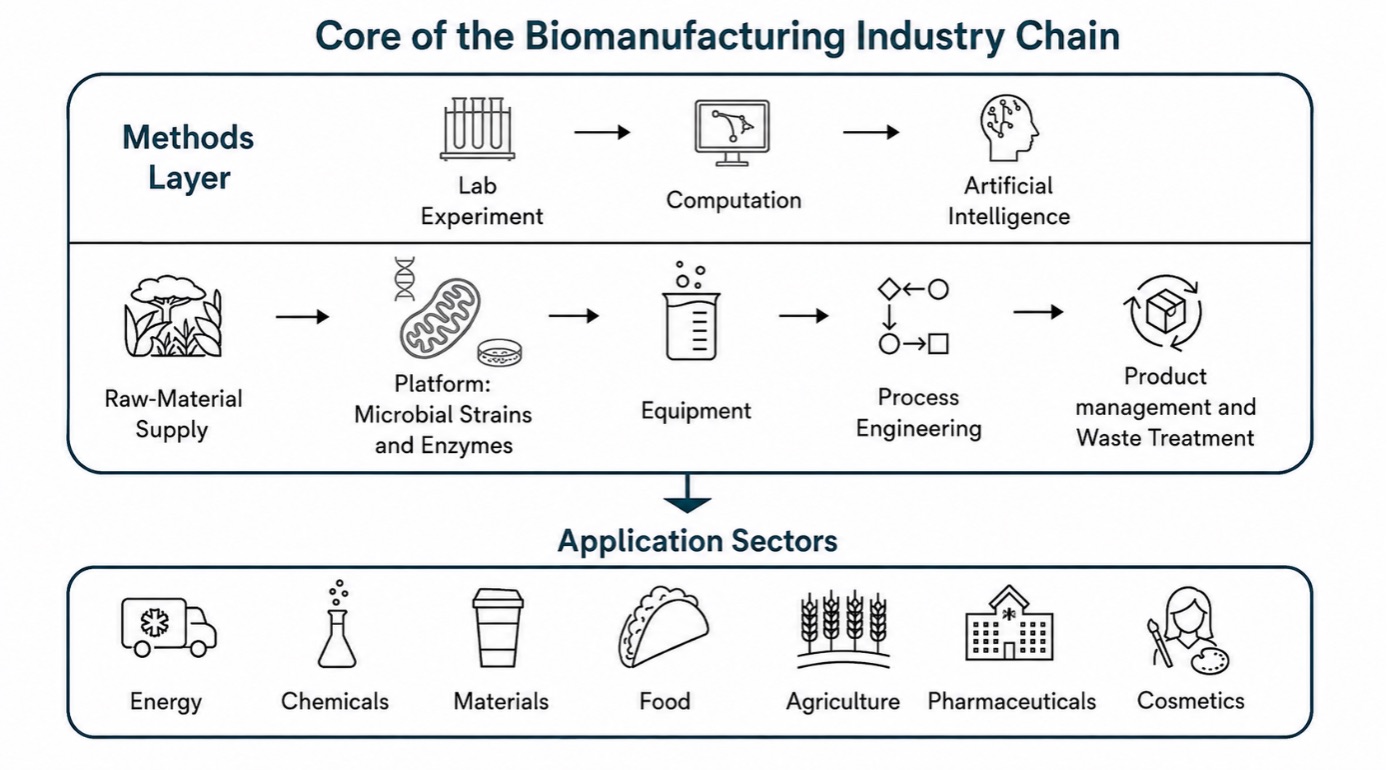
Fig. 1: Framework of the
Biomanufacturing Industry Chain.
Source: Own illustration based on Yun, Chen and Tan.[43]
Where sector-oriented perspectives tend to fixate on individual outputs, such as drug-licensing deals, this framework is more useful for identifying where an industrial system is exposed and which links are weak.
According to Tan and other Chinese researchers, the first vulnerability lies in raw-material supply. Roughly 90 percent of China's initial inputs come from corn and other grain crops, placing biomanufacturing in direct tension with food security. Non-grain biomass and industrial waste would be preferable alternatives, but they remain largely unindustrialized.[44]
The platform layer, built around microbial strains and enzymes, presents a clear paradox. China accounts for more than 70 percent of the world's basic fermentation capacity, a statistic Western analysts often cite when warning that Europe is losing "the next industrial race."[45] Yet China imports more than three-quarters of the core enzyme preparations on which its fermentation industry depends, and Chinese analysts worry about the foreign “near-monopoly” in high-end food and detergent enzymes[46], led by firms such as Novonesis (Denmark) and BASF (Germany).[47] One Chinese paper points to a further sore spot: in several areas where China leads the world, more than 80 percent of the industrial strains in use are unlicensed, exposing the sector to intellectual-property risk.[48] Downstream, the pattern repeats. High-end equipment remains heavily import-dependent, with the market split between German and US suppliers; and the market for high-end control systems and industrial software is dominated by Western firms as well, Siemens alone holding roughly 20 percent market share of the global programmable logic controller.[49]
Without question, under the banner of self-reliance, China is directing "extraordinary measures" toward the very links in its value chain that it considers weakest. One example is the drive to "break through a batch of landmark technological equipment." To this end, the Ministry of Industry and Information Technology (MIIT) and CAS launched a joint programme covering reactor systems, key components and consumables, and industrial operating systems. By late 2025, it had shortlisted around 28 projects to develop cheaper, higher-performance equipment.[50]
The push extends beyond equipment. In July 2025, MIIT and the National Development and Reform Commission (NDRC) set a target of establishing 20 pilot-scale biomanufacturing platforms by 2027. A subsequent notice designated 43 companies to build pilot plants and mapped priorities across the sector, from raw materials and equipment to downstream products, spanning six key areas and 37 industry directions.[51]
Another paradox lies in talent: The West envies China’s deep bench of inexpensive, capable junior engineers, while Chinese planners worry about the thin upper layer of interdisciplinary specialists spanning biology, chemistry, engineering, and computer science.[52] For two decades, China’s strongest students tended to avoid biotechnology. Biology, chemistry, materials, and ecology are known among high-school graduates as the “four great pits” (四大天坑) of STEM[53]: demanding, poorly paid, and eclipsed first by the country’s internet boom and now by artificial intelligence. Whether elevating the field to a national strategic priority will reverse that calculus remains an open question, but the system adapts quickly. After the 2026 college entrance examinations, the education ministry added a dedicated undergraduate major in biomanufacturing. Beijing is also buying talent at the top of the market, recruiting European Nobel Prize laureates and[54] welcoming Chinese-American scientists leaving the United States amid the disruptions of the Trump years.
Risks and Side Effects
In the past decades, biotechnology has been deeply globalized, with talent, capital, data, and research flowing across borders in pursuit of scientific and commercial opportunity. That model is now under growing strain. Although this article focuses on China and compares its approach with that of the EU, the United States is the decisive third actor because its policies increasingly shape the strategic choices of both European and Chinese companies.
One company, two systems
The U.S. BIOSECURE Act, enacted in 2025, restricts federal agencies from procuring goods or services from designated "biotechnology companies of concern," a category aimed primarily at firms with links to the Chinese state.[55] Although formally a procurement measure rather than a trade ban, its practical influence extends far beyond government contracting. Few multinationals, including those from Europe, can afford to lose access to U.S. federal funding, research partnerships, or the world's largest pharmaceutical market.
The side effect of the tightening regulatory scrutiny is the emergence of what might be called “one company, two systems”. Multinational firms increasingly operate separate business models for China and the United States. AstraZeneca, for example, has committed more than US$15 billion to Chinese research and manufacturing through 2030 while simultaneously building independent supply chains for the U.S. and Chinese markets.[56] Germany's Merck KGaA has adopted an "in China, for China" strategy (borrowed from German carmakers), producing largely for the domestic Chinese market and minimizing reliance on imported inputs, particularly from the United States.[57]
Whether this balancing strategy remains viable is increasingly uncertain. Washington is steadily expanding its biotechnology security agenda. Proposed legislation, including the Biotech Investment National Security Act (BINSA), would subject outbound biotechnology investments and pharmaceutical licensing agreements to national security review.[58] At the same time, U.S. policymakers are scrutinizing the extensive use of Chinese clinical trial sites by big pharma and considering restrictions on the acceptance of clinical data generated in China for regulatory approval.[59] Together, these measures signal a shift from regulating products to regulating investment, knowledge, and data flows.
The backlash risks run the other way too. In Beijing the governing logic is sovereignty over biological resources and genetic data. China's Biosecurity Law, Human Genetic Resources (HGR) Regulation[60], and related legislation require foreign companies to collaborate with Chinese partners when collecting or using Chinese human genetic resources and impose strict controls on cross-border transfers of genetic materials and associated data. The broader policy objective is to keep strategically valuable genetic resources under domestic control while continuing to attract foreign investment and technology.[61] For multinational companies, this creates structural risks, including constraints on data ownership, intellectual property, and the management of commercially sensitive research.
Set against both, the EU's central preoccupation remains closing the innovation gap rather than treating biotechnology as an instrument of national security. Biological and health data are governed principally through horizontal frameworks such as the GDPR and the European Health Data Space, which prioritize privacy, ethics, and research rather than sovereign control over genetic resources. Recent initiatives such as amendments to the Dual-Use Regulation and the Biotech Act I have introduced elements of biosecurity and research security. Nevertheless, the Union has no HGR-style regime, no EU-wide outbound-investment screen, and no procurement bar comparable to the American one.
Ethical governance: development first, governance later
Beneath geopolitical competition lies a deeper divergence in how biological risk is understood. Chinese governance is organised around the concept of anquan (安全), which merges the English notions of safety (protection against accidents) and security (protection against deliberate misuse) within the framework of state security.[62] In practice, this approach often places greater weight on national objectives than on individual rights, leaving persistent grey areas in research ethics, data governance and accountability. More broadly, China's regulatory model has frequently been described as "development first, governance later" (先发展,后治理): innovation is encouraged first, with oversight following in response to emerging risks.
The 2020 Biosecurity Law, enacted in the wake of Covid-19, consolidated previously fragmented legislation, yet Chinese scholars continue to identify significant shortcomings: a lack of concrete legal instruments, fragmented inter-agency coordination, limited accountability, and insufficient professional training and public-awareness efforts, even as the rapid advance of biotechnology poses ever-new challenges for risk assessment and governance.[63]
These weaknesses became starkly visible in July 2026, when Science published a lengthy investigation revealing the death of a young girl who had received an experimental brain gene-editing therapy at a Shanghai hospital in 2025. The trial had proceeded under the hospital's own ethics approval rather than national regulatory review, despite animal studies that reportedly identified serious safety concerns shortly beforehand. Her death was never publicly disclosed, even when the research team published supporting preclinical results in Nature in 2026, and even as the trial registry continued to list the study as "recruiting." The hospital paid a modest fine to a local authority; the lead investigator was not publicly sanctioned.[64] Coming seven years after the He Jiankui gene-editing scandal[65], the episode suggests that, despite substantial legislative reform, persistent gaps remain in ethical oversight, research transparency and institutional accountability.
Conclusion and Policy Recommendations
China's biotechnology and biomanufacturing sectors are evolving rapidly, and Europe's first task is to take off its own spectacles and study that trajectory more openly. Otherwise, it risks repeating earlier strategic misjudgements: The EU read China's push into electric vehicles largely through the single lens of emissions reduction, overlooking broader objectives such as reducing dependence on imported oil, upgrading industry capabilities, and integrating digital technologies into future mobility. By the time these wider ambitions became fully apparent, Chinese firms had already secured leading positions in global value chains.
Avoiding a similar mistake in biotechnology requires a stronger commitment to rigorous, empirically grounded research capable of grasping the full dimension. The current discourse is flattened into a binary of "us" and "them." In reality, multinationals, big pharma above all, have invested in China for years and maintain a deeply symbiotic relationship with Chinese contract manufacturers and biotech, forming an integral part of the very ecosystem Europe views as foreign. Neither uncritical admiration nor demonisation serves any purpose; both are captured by emotional narratives that neither capture the complexity of the industry's evolving political economy nor provide a sound basis for anticipating its future.
A more productive European strategy would combine strategic awareness with selective engagement. This requires a systematic mapping of China's biotechnology ecosystem: its industrial actors, research institutions and universities, financing mechanisms, policies at different levels, and international partnerships, alongside a clear-eyed identification of where cooperation advances the public interest and where genuine security risks lie.
Finally, Europe should recognise that it possesses comparative advantages of its own. While China's biotechnology ecosystem has demonstrated remarkable speed and scale, the EU has long-established strengths in research ethics, regulatory governance, transparency and accountability. Closer collaboration between European and Chinese universities, regulators and researchers on bioethics, responsible innovation and governance could strengthen ethical awareness, improve implementation standards, and promote greater transparency and accountability across the field. Such cooperation would not eliminate geopolitical competition, but it could help shape a biotechnology order that serves the global system rather than any single competitor within it.

 | Funded by the European Union. Views and opinions expressed are however those of the author(s) only and do not necessarily reflect those of the European Union or European Research Executive Agency (REA). Neither the European Union nor the granting authority can be held responsible for them. |
[1] Rosenbach, Eric, and et al. 2025. “Critical and Emerging Technologies Index.” Accessed August 05, 2026. https://www.belfercenter.org/critical-emerging-tech-index.
[2] National Security Commission on Emerging Biotechnology. 2024. “National Security Commission on Emerging Biotechnology Applauds U.S. House Passage of BIOSECURE Act.” Accessed August 05, 2026. https://www.biotech.senate.gov/press-releases/press-release-national-security-commission-on-emerging-biotechnology-applauds-u-s-house-passage-of-biosecure-act/.
[3] Tylecote, Andrew. 2019. “Biotechnology as a New Techno-Economic Paradigm That Will Help Drive the World Economy and Mitigate Climate Change.” Research Policy 48 (4): 858–68. https://doi.org/10.1016/j.respol.2018.10.001.
[4] Sheridan, Cormac. 2026. “EU Pushes for Broad Changes to Biotech Rules as China Gains Ground.” Nature biotechnology 44 (2): 167.
[5]European Commission. 2025. “Proposal for a Regulation to Establish Measures to Strengthen the Union's Biotechnology and Biomanufacturing Sectors (European Biotech Act).” Unpublished manuscript, last modified August 05, 2026. https://health.ec.europa.eu/publications/proposal-regulation-establish-measures-strengthen-unions-biotechnology-and-biomanufacturing-sectors_en.
[6] Sheridan, Cormac. 2026. “EU Pushes for Broad Changes to Biotech Rules as China Gains Ground.” Nature biotechnology 44 (2): 167.
[7]Philipp, Marc P. 2026. “Biotechnology: What China’s Rise Means for Europe.” Accessed August 05, 2026. https://www.kearney.com/industry/health/article/biotechnology-what-china-s-rise-means-for-europe.
[8] Kennedy, Kate H., Krisstel Gomez, Natalie J. Thovmasian, and Dennis C. Chang. 2023. “Small Biotechs Versus Large Pharma: Who Drives First-in-Class Innovation in Oncology?” Drug Discovery Today 28 (2).
[9]Goldman Sachs. 2025. “China Is Increasing Its Share of Global Drug Development.” Accessed August 05, 2026.
[10]DrugPatentWatch. 2026. “The Patent Cliff Panic: A Pain Point Every Pharma Investor Faces.” Accessed August 05, 2026. https://www.drugpatentwatch.com/blog/the-patent-cliff-panic-a-pain-point-every-pharma-investor-faces/.
[11] Loiacono, Hannah. 2026. “Harmful U.S. Policies Will Help Drive China’s Global Leadership in Biopharmaceutical Innovation.” Accessed August 05, 2026. https://phrma.org/blog/harmful-u-s-policies-will-help-drive-china-s-global-leadership-in-biopharmaceutical-innovation.
[12] Philipp, Marc P. 2026. “Biotechnology: What China’s Rise Means for Europe.” Accessed August 05, 2026. https://www.kearney.com/industry/health/article/biotechnology-what-china-s-rise-means-for-europe.
[13] Shaun Breslin. 2025. “What’s Rational for the National and What’s Focal for the Local? Towards a “Unified National Economy”?”.Accessed Augutst 05,2026. https://eh4s.eu/publication/whats-rational-for-the-national-and-whats-focal-for-the-local-towards-a-unified-national-economy
[14]Anja Senz, and Zhu Yi. 2026. “Behind the Green Boom: China’s Unequal Transition.” Accessed August 05, 2026. https://eh4s.eu/publication/behind-the-green-boom-chinas-unequal-transition.
[15]IntuitionLabs. 2025. “The Drug Development Timeline: Why It Takes over 10 Years.” November 18.
[16]Wu, Jing. 2026. “Annual PD-1 Treatment Costs Drop Below ¥10,000 as China's Innovative Drug Price War Erases a ¥100 Billion Market (PD-1年费用进入1万元区间,国产创新药内卷和消失的千亿市场).”36kr.com. Accessed August 05, 2026. https://36kr.com/p/1120580665864200.
[17] Li, Wei. 2025. “Irrational Hypercompetition in the Pharmaceutical Industry: History, Current State, Root Causes, and Paths to Breakthrough (制药行业非理性内卷:过去、现状、成因与破局).”Accessed August 05, 2026. https://mp.weixin.qq.com/s?__biz=MzAxMDMyMTQwMA==&mid=2247511797&idx=2&sn=8bb082e96434c86e8da454ba26aed1c6&poc_token=HGMkc2qjwChVIOuR-B9ciiA_XvhT-bTuskl6MLhp.
[18] Phirda. 2025. “The Bubble in China's ADC Sector Is Bursting (中国ADC的泡沫正在破裂).”Accessed Augutst 05, 2026. https://www.phirda.com/artilce_38546.html?module=trackingCodeGenerator.
[19] Bai, Lu. 2023. “The Innovation Potential of China's Homegrown ADCs: DS-8201 Is Not the Summit—It's the Beacon (国产ADC的创新空间:DS-8201不是高山,而是灯塔).”Accessed August 05, 2026. https://mp.weixin.qq.com/s?__biz=Mzg2OTY4MTEzMA==&mid=2247591602&idx=3&sn=d3a41223a5a1cb4e102604c11025bb33&chksm=ce9a7437f9edfd2149aad70c7735ad085369a84c9239f879bff3b1da9c8a0ec459b298ddc247.
[20] Phirda. 2025. “The Bubble in China's ADC Sector Is Bursting (中国ADC的泡沫正在破裂).”Accessed Augutst 05, 2026. https://www.phirda.com/artilce_38546.html?module=trackingCodeGenerator.
[21] Ma, Emma. 2026. “Lab Monkey Prices at Record Highs as China’s Biotech Boom Fuels Windfall for Breeders.” South China Morning Post, July 16. https://www.scmp.com/economy/article/3360803/lab-monkey-prices-record-highs-chinas-biotech-boom-fuels-windfall-breeders.
[22] Shanghai Securities News. 2026. “The "Monkey Shortage" Reveals Path Dependence in the Pharmaceutical Industry: Breakthroughs in Original Innovation Are Urgently Needed (“猴荒”折射医药产业路径依赖源头创新亟待跨越).”Sina Mobile, July 24. https://finance.sina.cn/2026-07-24/detail-iniivpqx5196362.d.html?vt=4.
[23] Liu, Changrong. 2025. “How Can "Involutionary" Competition in Innovative Drugs Be Avoided? Two Government Agencies Jointly Introduce Key Measures (如何避免创新药“内卷式竞争”?两部门联合出台重要措施).”China Youth Daily, July 1. https://m.cyol.com/gb/articles/2025-07/01/content_0zRmzeuvaj.html.
[24] Li, Wei. 2025. “Irrational Hypercompetition in the Pharmaceutical Industry: History, Current State, Root Causes, and Paths to Breakthrough (制药行业非理性内卷:过去、现状、成因与破局).”Accessed August 05, 2026. https://mp.weixin.qq.com/s?__biz=MzAxMDMyMTQwMA==&mid=2247511797&idx=2&sn=8bb082e96434c86e8da454ba26aed1c6&poc_token=HGMkc2qjwChVIOuR-B9ciiA_XvhT-bTuskl6MLhp.
[25] Yi, Qushi. 2023. “A Wave of Major Policy Documents: Will the Disorder in Clinical Trials Finally Be Addressed? (重磅文件频发,临床试验“乱象”要改观了?).”Jiemian News, July 31. https://www.jiemian.com/article/9836900.html.
[26]Chen, Xiyuan. 2026. “Why Has This Biomedical Research Field Become a Hotspot for Academic Fraud? (这个生物医学研究领域,缘何沦为学术造假“红区”).”Xinhua News, May 11. https://www.nju.edu.cn/info/1056/468351.htm.
[27]The Economist.2026. “A Dropout-Turned-Influencer Shakes up Chinese Science.” The Economist, June 08, 2026. Accessed August 05, 2026. https://www.economist.com/china/2026/06/08/a-dropout-turned-influencer-shakes-up-chinese-science.
[28]Phirda. 2025. “How to Invest in China’s Innovative Drugs over the Next Decade? (中国创新药,下一个10年怎么投?).” Accessed August 05, 2026. https://www.phirda.com/artilce_38363.html?module=trackingCodeGenerator.
[29] Yiyao Mofang. 2026. “He Ruyi’s Next Move: The Next Chapter for China’s Innovative Drug Industry (何如意的转身:中国创新药的下一段路).” Accessed August 05, 2026. https://mp.weixin.qq.com/s/Vc4BJCY_A3XtDuwThpE20Q.
[30] Oertel, Janka, and Nina Schmelzer. 2026. “The Future Is Fermented: How Europe Can Succeed in the Next Industrial Race.” Accessed August 05, 2026. https://ecfr.eu/publication/the-future-is-fermented-how-europe-can-succeed-in-the-next-industrial-race/.
[31]Helle, Katrin, and Constantin Teetzmann. 2026. “EU Biotech Act: The European Commission’s landmark proposal to strengthen biotechnology in Europe.” Accessed August 05, 2026. https://www.whitecase.com/insight-alert/eu-biotech-act-european-commissions-landmark-proposal-strengthen-biotechnology-europe
[32]European Parliament. 2026. “European Biotech Act II | Legislative Train Schedule.” Accessed August 05, 2026. https://www.europarl.europa.eu/legislative-train/theme-a-new-plan-for-europe-s-sustainable-prosperity-and-competitiveness/file-european-biotech-act-ii.
[33] Wang, Yuxi. 2024. “Focus Interview: Developing New Quality Productive Forces — Biomanufacturing: Manufacturing Everything (焦点访谈:发展新质生产力生物制造制造万物).”China Central Television (CCTV), January 26. https://news.cctv.com/2024/01/26/ARTIiLGt5s118iViaUCrbrOu240126.shtml.
[34] Su, Xi, and Ouyang, Xuemei. 2022. “The “863 Program”— The Cradle of High-Tech Talent Development in New China (“863”计划——新中国高技术人才培养的摇篮).”China Talent Magazine, November 4. https://www.zuzhirenshi.com/magazine/detail/b2340115-223b-46a6-9c8b-be1034bc2639.
[35] Notice of the State Council on Issuing the “13th Five-Year Plan” for National Scientific and Technological Innovation — Ministry of Science and Technology of the People’s Republic of China (国务院关于印发“十三五”国家科技创新规划的通知-中华人民共和国科学技术部). State Council of the People’s Republic of China. State Council promulgation. August 10, 2016. Accessed August 05, 2026. https://www.most.gov.cn/xxgk/xinxifenlei/gjkjgh/201608/t20160810_127174.html.
[36] National Development and Reform Commission. 2022. “The “14th Five-Year Plan” for Bioeconomy Development (“十四五”生物经济发展规划).” Accessed May 08, 2026 https://faolex.fao.org/docs/pdf/chn224903.pdf.
[37] People's Tribune. 2025. “Exclusive Interview with Academician Tan Tianwei of the Chinese Academy of Engineering: How Biomanufacturing Has Become a New Engine of China’s Economic Growth (专访中国工程院院士谭天伟: 生物制造何以成为中国经济增长新引擎).”Accessed August 05, 2026. https://paper.people.com.cn/rmlt/pc/content/202512/17/content_30130615.html.
[38] Bio-based and Biomanufacturing Industry Service Platform. 2025. “Biomanufacturing: Under the “15th Five-Year Plan,” How Will China Build Another High-Tech Industry over the Next Decade? — Bio-Based and Biomanufacturing Industry Service Platform (生物制造,“十五五规划”未来10年, 中国如何再造一个高技术产业?_生物基和生物制造产业服务平台).”Accessed August 05, 2026. https://www.bio-basedlink.net/index/news/news_show/article_id/1202.html.
[39] China Innovation Industry Research Institute. 2024. “White Paper on the Development of China’s Industrial Biotechnology (2024)《中国工业生物技术发展白皮书2024》.” Accessed August 05, 2026. https://mp.weixin.qq.com/s?__biz=MzAxNTI0ODEzNA==&mid=2653383273&idx=1&sn=f64b0b490b3d0e7830f2c595f971a446&chksm=81304116e30baa643fe0b56f1b84a47486ccd3af75de2c17f07075e76c44efb2a9740dbd02c7&scene=0&xtrack=1.
[40] Brown, Alexander, and Jeroen Groenewegen-Lau. 2025. “Lab Leader, Market Ascender: China's Rise in Biotechnology.” Unpublished manuscript, last modified May 08, 2026.
[41]National Technology Innovation Center for Synthetic Biology. 2025. “White Paper on the Development of China’s Industrial Biotechnology (2025)《中国工业生物技术发展白皮书2025》.” Accessed August 05, 2026. https://www.ncsynbio.com/col.jsp?id=121.
[42]Yun, Huimin, Biqiang Chen, and Tianwei Tan. 2025. “Technology Advances and Future Trends in China's Biomanufacturing Technologies.” Science & Technology Review 43 (23): 24–32.
[43] Ibid.
[44]Yang, Yanping, Zhao Li, Changrou Li, Hongxiang Zhang, Guoqiang Chen, and He Huang. 2026. “Current Status, Issues, and Policy Recommendations of Biomanufacturing Development in China.” Science & Technology Review 44 (5): 24–31. https://www.sinomed.ac.cn/article.do?ui=2026267398. Accessed August 05, 2026.
[45] Oertel, Janka, and Nina Schmelzer. 2026. “The Future Is Fermented: How Europe Can Succeed in the Next Industrial Race.” Accessed August 05, 2026. https://ecfr.eu/publication/the-future-is-fermented-how-europe-can-succeed-in-the-next-industrial-race/.
[46] Yun, Huimin, Biqiang Chen, and Tianwei Tan. 2025. “Technology Advances and Future Trends in China's Biomanufacturing Technologies.” Science & Technology Review 43 (23): 24–32.
[47] MarketsandMarkets. 2024. “Top Companies in Enzymes Industry - BASF SE (Germany) And Novozymes A/S (Denmark).” Accessed August 05, 2026. https://www.marketsandmarkets.com/ResearchInsight/enzyme-market.asp.
[48]Yang, Yanping, Zhao Li, Changrou Li, Hongxiang Zhang, Guoqiang Chen, and He Huang. 2026. “Current Status, Issues, and Policy Recommendations of Biomanufacturing Development in China.” Science & Technology Review 44 (5): 24–31. https://www.sinomed.ac.cn/article.do?ui=2026267398. Accessed August 05, 2026.
[49] “Programmable Logic Controller (PLC) Market Size, Share, Trends and Forecast by Type, End Use Industry, and Region, 2026-2034.” 2025. Unpublished manuscript, last modified August 05, 2026. https://www.imarcgroup.com/programmable-logic-controller-market.
[50] Shen, Jiaping. 2025. “Two Departments Announce the List of Shortlisted Organizations for the Innovation Task of High-Performance Bioreactors (兩部門公布高性能生物反應器創新任務入圍揭榜單位名單).”People's Daily, December 19. http://finance.people.com.cn/BIG5/n1/2025/1219/c1004-40628145.html.
[51] Fang, Xiaoxia. 2026. “The “Momentum” and “Action” Behind the Industrialization of Biomanufacturing (生物制造产业化的“势”与“为”).”People's Tribune, June 18. https://paper.people.com.cn/rmlt/pc/content/202606/18/content_30165646.html.
[52] Yang, Yanping, Zhao Li, Changrou Li, Hongxiang Zhang, Guoqiang Chen, and He Huang. 2026. “Current Status, Issues, and Policy Recommendations of Biomanufacturing Development in China.” Science & Technology Review 44 (5): 24–31. https://www.sinomed.ac.cn/article.do?ui=2026267398. Accessed August 05, 2026.
[53] Xing, Haiyang. 2025. “Why Have the “Four Pitfall Majors” Once Discouraged by Zhang Xuefeng Suddenly Made a Comeback? (张雪峰劝退的“四大天坑”专业,怎么突然翻身了?).” June 8.
[54]For example, German biochemist and Nobel laureate Hartmut Michel took up a full-time professorship at Jilin University in 2026. https://www.guancha.cn/internation/2026_04_28_815247.shtml French Nobel laureate Jules Hoffmann, meanwhile, has collaborated with Guangzhou Medical University since 2013 to establish the Sino-French Hoffmann Institute (SFHI), an immunology research institute named after him. https://huacheng.gz-cmc.com/pages/2024/12/22/f34098c766be4543876eac65958197ab.html
[55]Latham & Watkins. 2025. “BIOSECURE Act Becomes Law, Limiting Grants with “Biotechnology Companies of Concern”.” Accessed August 05, 2026. https://www.lw.com/en/insights/biosecure-act-becomes-law-limiting-grants-with-biotechnology-companies-of-concern.
[56] Liu, Angus. 2024. “AstraZeneca Plans Independent Drug Supply Chains for US and China, CEO Says.” Fierce Pharma, March 27. https://www.fiercepharma.com/manufacturing/astrazeneca-builds-separate-drug-supply-chains-us-and-china-ceo-says.
[57] Reuters. 2023. “Merck KGaA Aims to Build Domestic Supply Chains in China.” Reuters Media, November 5.2023. Accessed August 05, 2026. https://www.reuters.com/business/healthcare-pharmaceuticals/merck-kgaa-aims-build-domestic-supply-chains-china-2023-05-11/.
[58]Select Committee on the CCP. 2026. “Moolenaar, Dingell Introduce Legislation to Prevent Offshoring Biotech Industry to China.” Accessed August 05, 2026. https://chinaselectcommittee.house.gov/media/press-releases/moolenaar-dingell-introduce-legislation-to-prevent-offshoring-biotech-industry-to-china.
[59] JD Supra. 2026. “House Committee Report Signals Limits on Foreign Clinical Data.” Accessed August 05, 2026. https://www.jdsupra.com/legalnews/house-committee-report-signals-limits-6775285/.
[60] Wang, Katherine. 2023. “China Unveils Implementing Rules on the Administration of Human Genetic Resources.” Accessed August 05, 2026.
[61] Nye, Christopher, and Charles Sun. 2026. “Beijing’s Asymmetric Securitization of Genomic Data.” Politics & Society 26 (13). Accessed August 05, 2026.
[62] Li, Yujuan. 2025. “A soft law perspective on the governance of biorisks in synthetic biology.” Synthetic Biology 6: 1–14.
[63]Min, Kaiyuan, Yi Zhang, Jiangfeng Liu et al. 2025. “China's Biosafety/biosecurity Governance: Evolution, Challenges, and Architecture Design.” Frontiers of medicine 19 (5): 871–78. https://doi.org/10.1007/s11684-025-1158-y.
[64] Borrell, Brendan. 2026. “A Fatal Reaction: A Cutting-Edge Gene-Editing Trial in China Went Disastrously Wrong. A Family Wants Accountability.” American Association for the Advancement of Science, July 23.
[65] Greely, Henry T. 2019. “CRISPR'd Babies: Human Germline Genome Editing in the 'He Jiankui Affair'.” Journal of law and the biosciences 6 (1): 111–83.