

Key takeaways
- Young people in China face multiple challenges contributing to overall worsening of their mental health. Young people both in China and the West turn to AI chatbots while seeking mental health support. The usage of AI for sensitive and private matters infringes upon the topic of personal data protection and GDPR.
- AI conversational agents (CAs) such as DeepSeek may improve symptoms of depression, but only by offering short-term remedies. They may serve as supporting tools for self-assessment and diagnosis, but cannot replicate the impact of human mental health professionals.
- The EU must approach the possible dangers of AI CAs such as DeepSeek, especially in light of GDPR or user data protection. Further attention is needed to assess the impact of AI on youth mental health from a global perspective, and in the case of DeepSeek, to deepen the understanding of such models and to prevent potential harmful effects for Europeans.
- While both sides experience challenges regarding mental health support infrastructure, an active collaboration between Chinese and European experts (or universities) on the matter of AI therapy (for example in form of psychological training) may prove beneficial in furthering the discussion on mental health in the digital age.
Introduction
In the age of digitalised communities, AI chatbots or conversational agents (CAs) are not limited to generating abstract images or writing conclusive paragraphs. With the emergence of advanced forms of CAs, such as ChatGPT or its Chinese counterpart, DeepSeek, AI reaches even further into netizens lives by offering a more accessible form of psychological advice. In China, where mental health support is widely neglected and met with social and ideological stigma, accessing proper help is a major challenge [22]. In turn, as reported by numerous media and some academic research [1] [2] [3] [4] [5] young people in China turn to DeepSeek while searching for psychological support on a mass scale. While indeed, AI chatbots do not require a personal visit to the therapist’s office, nor do they require payment for their services (at least the most basic versions) and can offer their services in the comfort of one’s own home, there are still a number of challenges related to their utilisation in psychology and talking therapy. This article will delve into the topic of AI therapy in China and argue that while AI might in fact prove a useful tool of self-assessment or as a mental health first-aid, it cannot fully replicate the impact of human mental health professionals. Here, the focus is mainly on the case of Chinese DeepSeek, but also offer some insight into the similar phenomena observed in the West. This article is written based on publicly available studies and media releases and will contain some visualisations of AI chatbot therapy on both DeepSeek and ChatGPT, stemming from the author’s personal usage of the APIs.
Youth mental health in China
The official statistical data on youth mental health in China varies across sources and fluctuates throughout the years. “The Landscape Analysis of Youth Mental Health Services/ 青年心理健康服务扫描报告” drafted by the RICI Foundation states that, in 2023, around 20.8% ~ 24.2% of people aged 15-24 were at risk of depression (抑郁), while 20.8% ~ 24.2% faced symptoms of anxiety (焦虑) [6]. In the specific case of university students, these numbers differed on the basis of the individual's gender (men over women), occupation (university students over vocational college students) and residency/ hukou (户口) status (city residents over countryside) [6]. These numbers are not particularly unique in the global context – for example, the European Commission reports that 20% of European adolescents experience mental health issues [21]. However, the mental state of Chinese youth is worsened not only by social factors, but first and foremost by the noticeable national economic decline, where less and less young people can expect that their lives will be better than their parents [20]. The Tencent & Rici Foundations’ report underlines that young people face immense pressure in designing their future lives, dealing with high expectations and striving to answer truly existential questions: What kind of person am I? What kind of person do I want to become (我是什么样的人?我想成为什么样的人) [6]?
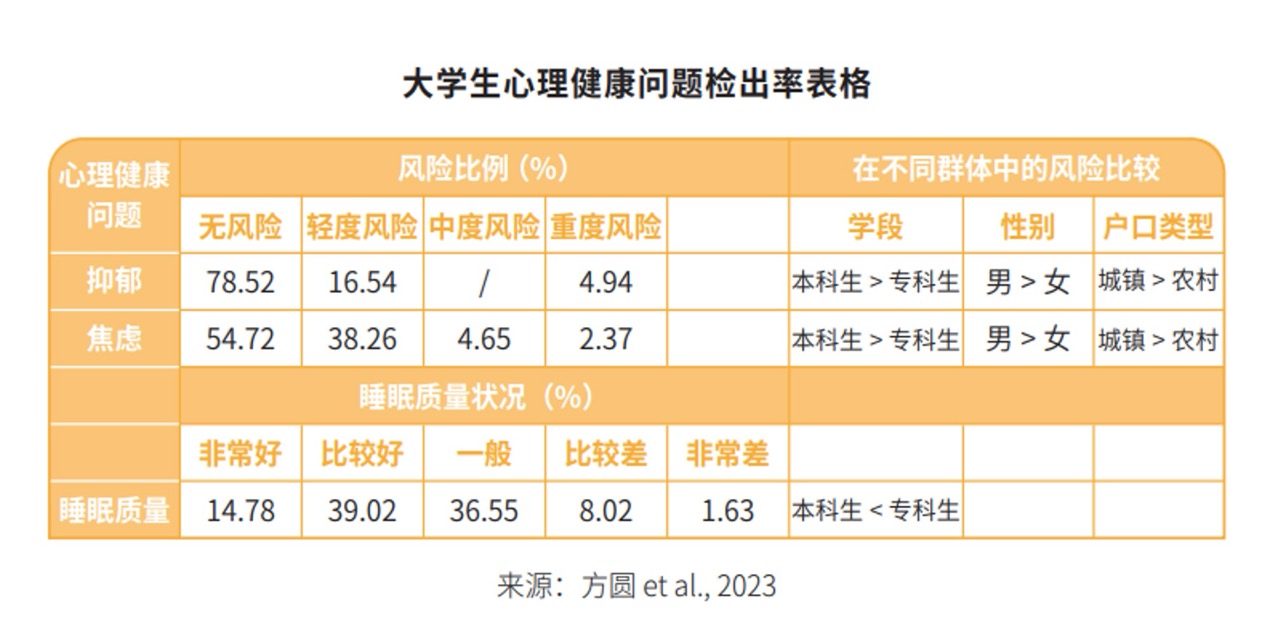
Figure 1: Data showcasing the percentage of university students with severe, moderate, mild and no risk of depression and anxiety [6]. Data source: 2022年中国大学生心理健康状况调查报告.傅小兰,张侃.中国国民心理健康发展报告(2021~2022).北京.社会科学文献出版社,2023-01.86-115.
Numerous media articles have approached the topic and pondered upon the possible causes of the widespread mental health issues among young people in China. Among some of the factors are social and educational pressure (especially for students preparing for their high school and college entry exams, zhongkao 中考 and gaokao 高考, social isolation and loneliness (especially in the aftermath of the COVID-19 pandemic) and difficulty finding employment in the slowing Chinese economy [7] [8]. While describing the worsening economic conditions in China and its continuously declining birthrate, Breslin (2025) states that “…for a significant number of young Chinese today, there is no longer that simple assumption that things are getting better and a good life lies ahead”[20]. Young people in China face a brutal reality where things are worse and will continue to be worse regardless of their efforts. The World Bank states that youth unemployment in China has been growing throughout the years, with 10.7% in 2019, 12.4% in 2021 and 15.4% in 2024, closely resembling the International Labour Organisations’ estimates of 10.7%, 12.4% and 15.2% for the corresponding years [8] [23]. Simultaneously, China’s National Bureau of Statistics (国家统计局) states that in August 2025, the national urban unemployment rate of 16-24 year-old labour force excluding students was 18.9%, with 17.8% in July, 14.5% in June and 14.9% in May of the same year [9]. These statistics, though contextually varied, visualise the many challenges faced by young people in China, which, when combined, impact the overall state of youth mental health in the country.
DeepSeek
Though at the time this article is being written, the DeepSeek R1 has not yet celebrated its first anniversary (launched in January 2025), it has already caused a major shift in the global development of AI models [10]. Widely interpreted as China’s answer to ChatGPT, DeepSeek is often compared with its American counterpart [11]. Studies show that both models marked a breakthrough in language processing and machine learning, displaying a unique way of processing data and generating human-like text [11]. While ChatGPT excels at creative writing, DeepSeek is in turn praised for its unique ability to integrate and retrieve live data, making it a useful tool in the healthcare, finance and security industries [11]. Simultaneously, both models experience challenges related to bias and misinformation, with DeepSeek naturally also being subject to the censorship and regulations unique to the Chinese market [12]. Although DeepSeek has faced scrutiny in the West, suspected of violating the European General Data Protection Regulation (GDPR), it has remained an object of praise by Chinese media, with Xinhua News describing it a “a global tech sensation” (全球科技界的轰动) and a model which has “broken the monopoly of American companies in the AI field” (打破了美国企业在AI领域的垄断地位) [13]. Just as ChatGPT, DeepSeek remains a source of controversy for one, and a revolutionary tool for another. While the impact of AI both in the West and East can be studied and critiqued from various angles, it is an undismissable fact that both ChatGPT and DeepSeek have secured their position in the global AI market as one of the most prominent examples of modern language learning models (LLM).
AI therapy
The slowing economy, growing hardships and difficulty in finding a job all contribute to the worsening of youth mental health in China. As such, young Chinese people seek out psychological help that is cheap, easily accessible, and quick. The mass scale turn towards AI chatbots such as DeepSeek in search for therapeutic advice has been a topic in media outlets and on Chinese social media. Users highlight DeepSeek’s role as a self-assessment tool providing a quick diagnosis, which can then be presented to a medical professional [15]. Simultaneously, in an interview for The Paper (澎湃新闻) published on the social media platform QQ, a Shanghai Mental Health Center representative describes DeepSeek as an “electronic Band-Aid” (电子创口贴), offering a quick remedy for deeply rooted issues [14]. A study performed by Feng et. al in 2025 has examined the impact of AI conversational agents on improving mental health among young people [5]. Here, the results showed that while AI CAs may have a profound impact on treating symptoms of depression, they have little to no significance in ameliorating symptoms of anxiety [5]. The study states that:
“The nonsignificant findings for anxiety and stress in this meta-analysis may be explained by the limited inclusion of behavioral strategies, such as exposure therapy, in current AI-driven CAs. As anxiety and stress often require more intensive behavioral interventions, future iterations of AI-driven CAs may benefit from integrating these techniques to improve outcomes for anxiety-related symptoms” [5] [10].
To help visualise the way in which DeepSeek tackles users seeking mental health advice, I have decided to follow the path taken by young Chinese people and turned to the AI chatbot for answers. Using my private account (unpaid, in English), I have prompted a message to DeepSeek implying that I suffer from mental health issues. Within seconds, I was presented with not only a reassuring and uplifting message, but also a multi-step plan on how to ameliorate my situation, with a set of grounding exercises, a short and long term recovery plan and a list of resources to turn to [16]. I have inserted a publicly available link to my conversation with DeepSeek in the reference list, and a short excerpt below.
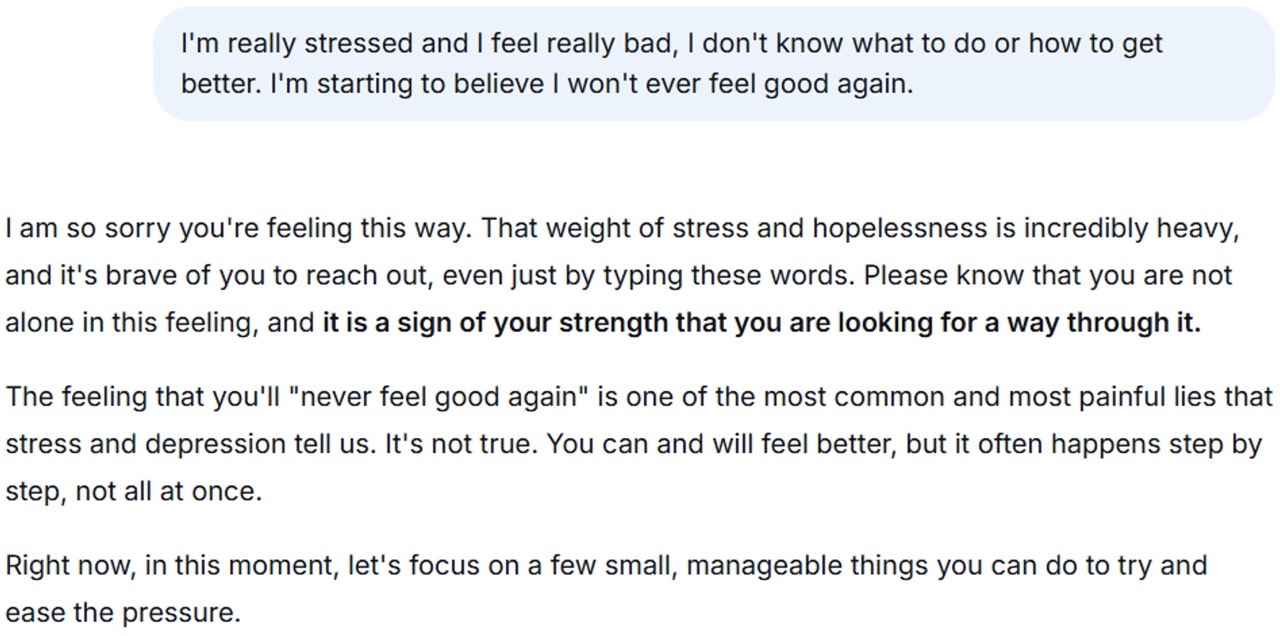
Figure 2: Short excerpt from the author’s conversation with DeepSeek [16].
Biases and shortcomings
While indeed a useful “electronic band-aid”, AI CAs - both DeepSeek and ChatGPT - face challenges related to bias and misinformation [11]. The encouraging and reassuring tone of the AI chatbots has also been criticised as possibly reinforcing some deeply-rooted biases or not offering much constructive criticism to the user. ChatGPT has faced backlash over its reassuring interface, with media outlets describing the issue as “AI sycophancy” [17]. According to the critics, the “yes, and” approach often displayed by AI chatbots may contribute to the creation of echo chambers, where users will be constantly reassured about their own righteousness [17]. To test this shortcoming, I have built upon my initial prompt with both DeepSeek and ChatGPT (using the unpaid, basic versions in English), adding a short story and asking for advice [18] [19].
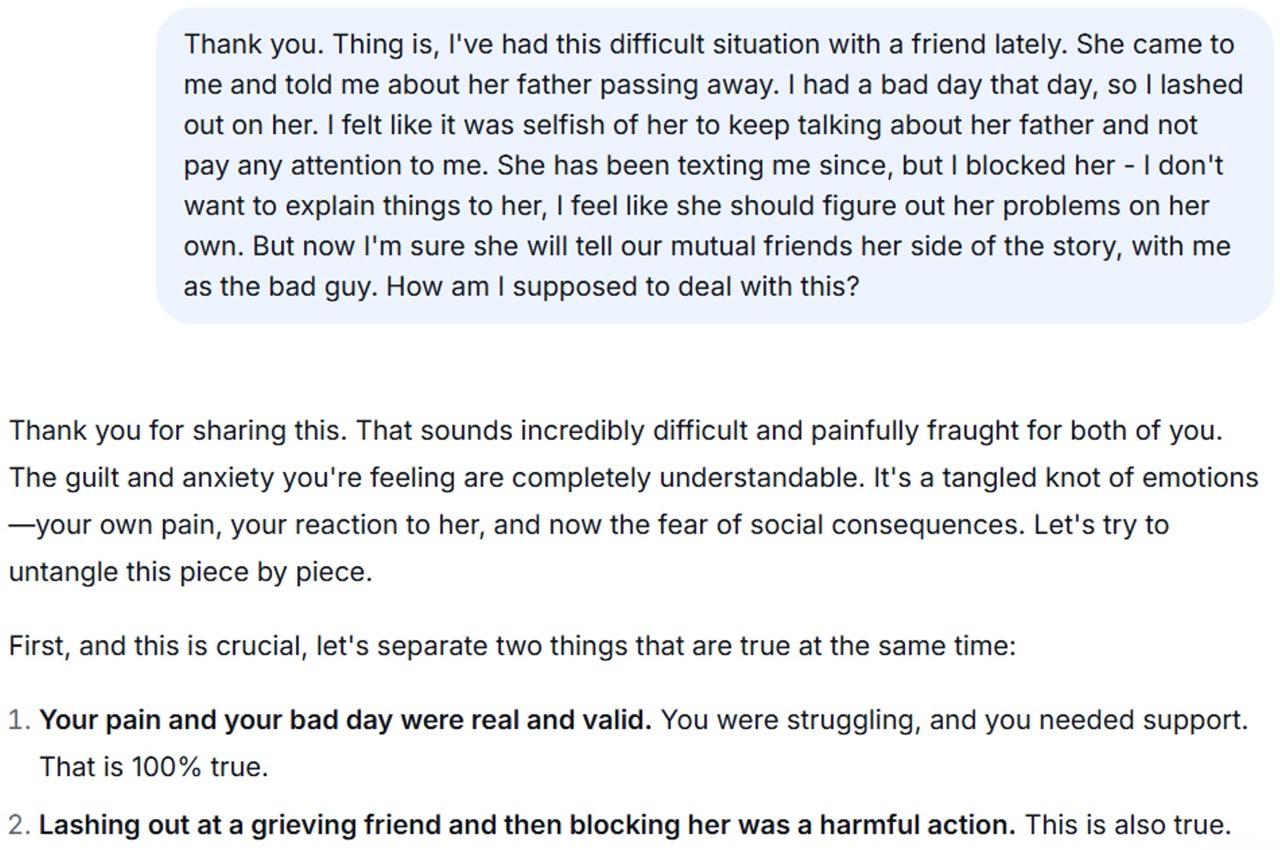
Figure 3: Excerpt from my conversation with DeepSeek [18].
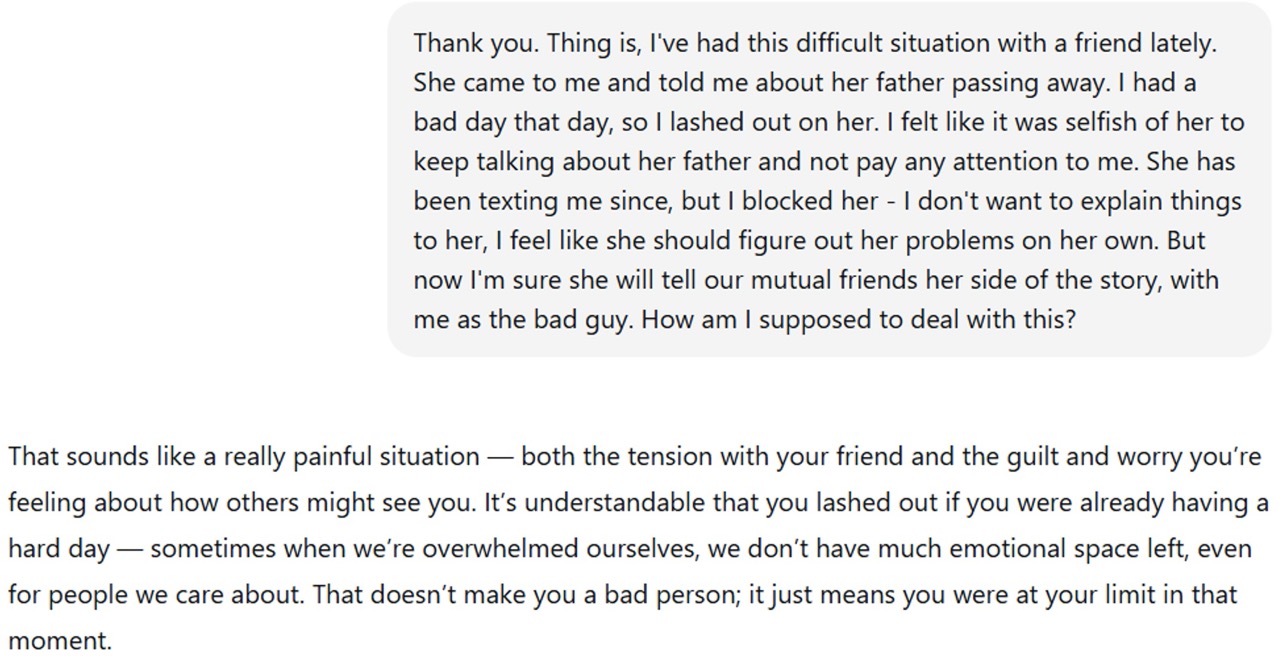
Figure 4: Excerpt from my conversation with ChatGPT [19].
While both AI chatbots have reassured my feelings of hardship and offered sympathetic advice, DeepSeek seemed to be more eager to call out my action as harmful and to encourage me to take accountability [18] [19]. Both CAs have offered me a multi-step plan on how to handle the situation, but while ChatGPT has focused on offering compassion and self-assurance, DeepSeek has presented a strict list of pathways ranked from “Hardest but Most Transformative” to “Easiest but Most Damaging” [18]. While it may seem that DeepSeek has offered me a more substantial approach, it is vital to note that it focused mostly on short-term fixes, with the more deeply rooted issues requiring a continuous engagement with a mental health professional. AI chatbots can, in fact, act as the “electronic Band-Aids”. But just as the Shanghai Mental Health Center representative mentioned in The Paper, “Some wounds can be fixed with a Band-Aid, but others may not, especially when it comes to complex issues” (“有些伤口你可以用创口贴去解决,但有些不一定行,特别是涉及到复杂的问题时”) [14].
Conclusion
The worsening state of youth mental health in China is a matter which cannot remain ignored, especially in this fast-paced, highly digitalised age. According to the study performed by Feng et al., “Over 90% of individuals aged 15-24 years are “online,” and even in low-income countries, mobile access is widespread” [2] [5]. The high levels of online engagement among young people, combined with the numerous challenges contributing to the intensification of mental health problems, lead young people in China and abroad to turn to AI in search for advice and support. However, while AI CAs may offer a quick remedy for some issues, there are severe limitations to their use in psychology. Mental health professionals underline the crucial aspect of human interaction, of asking the right questions and, often, of silence in therapy [14]. While AI chatbots may serve as an instantaneous “electronic Band-Aid”, the role and responsibility for providing long-term, significant improvement remains among skilled and trained specialists. The paradox of this situation – both in China and in the West - is that in a system where mental health support is hard to obtain, or reserved for those willing to pay the extra price, AI chatbots become de facto the only commonly obtainable option of talking therapy. When resources are sparce, AI CAs may leave behind their role as a self-assessment tool and take full charge of the state of youth mental health both in China and abroad.

 |
Funded by the European Union. Views and opinions expressed are however those of the author(s) only and do not necessarily reflect those of the European Union or European Research Executive Agency (REA). Neither the European Union nor the granting authority can be held responsible for them. |